Location
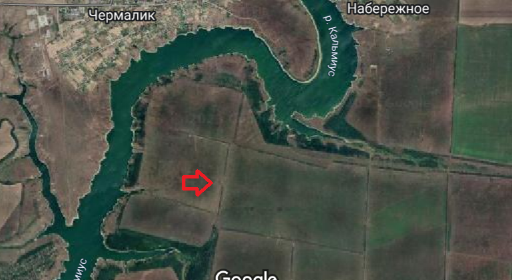
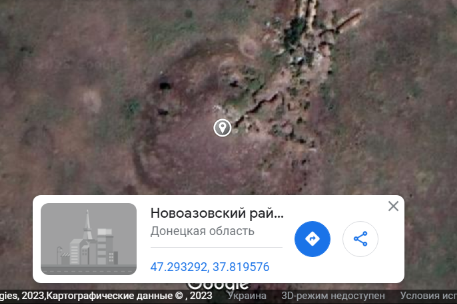
Donetsk region, Volnovakha district, two kilometers southeast of Chermalyk settlement
Kind of cultural heritage
information is being clarifiedInvolved
representatives of the illegal armed formations of the so-called Donetsk People’s Republic
Map
History
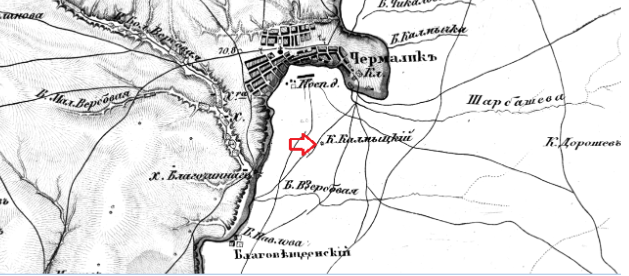
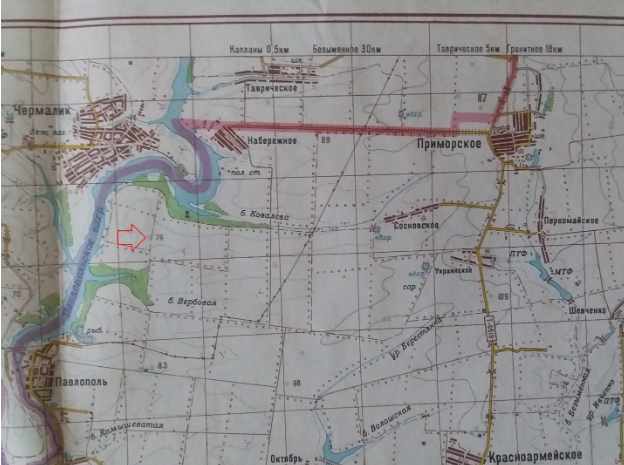
The barrow is located two kilometers southeast of Chermalyk settlement, Volnovakha district. The barrow has a historical name – Kalmytskyi – and is easily found on the mid-19th century map of Theodor Friedrich von Schubert (picture No. 1) owing to the peculiarity of its location on the promontory ledge of the rocky mass that forms the banks of the Kalmius River. In 1943, the German defense line called Turtle passed along the Kalmius, but after the fall of the Mius-Front no major battles took place in this area because the fate of the frontline was then decided by the developments near the towns of Izium and Sloviansk. Currently, it is the proximity to a natural obstacle – a modern reservoir – that determined the fate of the barrow during the Russian aggression against Ukraine: the occupiers turned it into their stronghold.
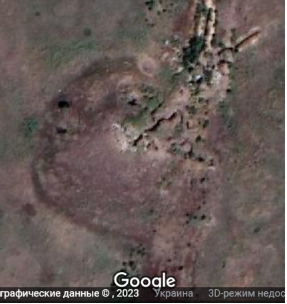
The mound of the barrow is 60 meters in diameter. According to space images, it has been damaged by trenches on the north-eastern side, and a firing position has been set up on its top (picture No. 3). Works on the creation of fortifications were carried out by representatives of the illegal armed formations of the so-called Donetsk People’s Republic in the fall of 2014. The fortifications were used before the start of Russia’s full-scale aggression on February 24, 2022.
Excavations of barrows in this area have been repeatedly carried out by expeditions of the Donetsk Regional Museum of Local Lore and Donetsk National University. Data from excavations show that barrow burial complexes in this area are represented by many cultures and cover all eras, starting with the Aeneolithic era.
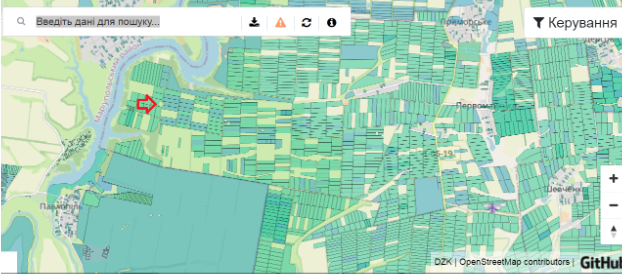
Data from the cadastral map indicate that the barrow has been inventoried and withdrawn from land use (picture No. 5).
Violation description
Works on the creation of fortifications were carried out by representatives of the illegal armed formations of the so-called Donetsk People’s Republic in the fall of 2014. The fortifications were used before the start of Russia’s full-scale aggression on February 24, 2022.
Gallery
Article source and links
- Barrows of Donetsk region. Archaeological Almanac, no. 14, p. 3–12