General information
Location
Museum from which it was moved Crimean Republican Institution “Kerch Historical and Cultural Preserve”
Museum where it was movedAzov Historical, Archaeological and Paleontological Museum-Reserve
Kind of cultural heritage
Museum objectsObject type
information is clarifiedViolation type
Illegal archaeological excavations Illicit removal or export of museum items/collections MisappropriationResearch zone
Autonomous Republic of CrimeaMap
Object history and violation description
On the territory of the Autonomous Republic of Crimea, by order of the so-called Council of Ministers of the Republic of Crimea dated December 11, 2014, the occupation institution State Budgetary Institution of the Republic of Crimea “East Crimean Historical and Cultural Preserve” was established instead of the liquidated Kerch Historical and Cultural Preserve.
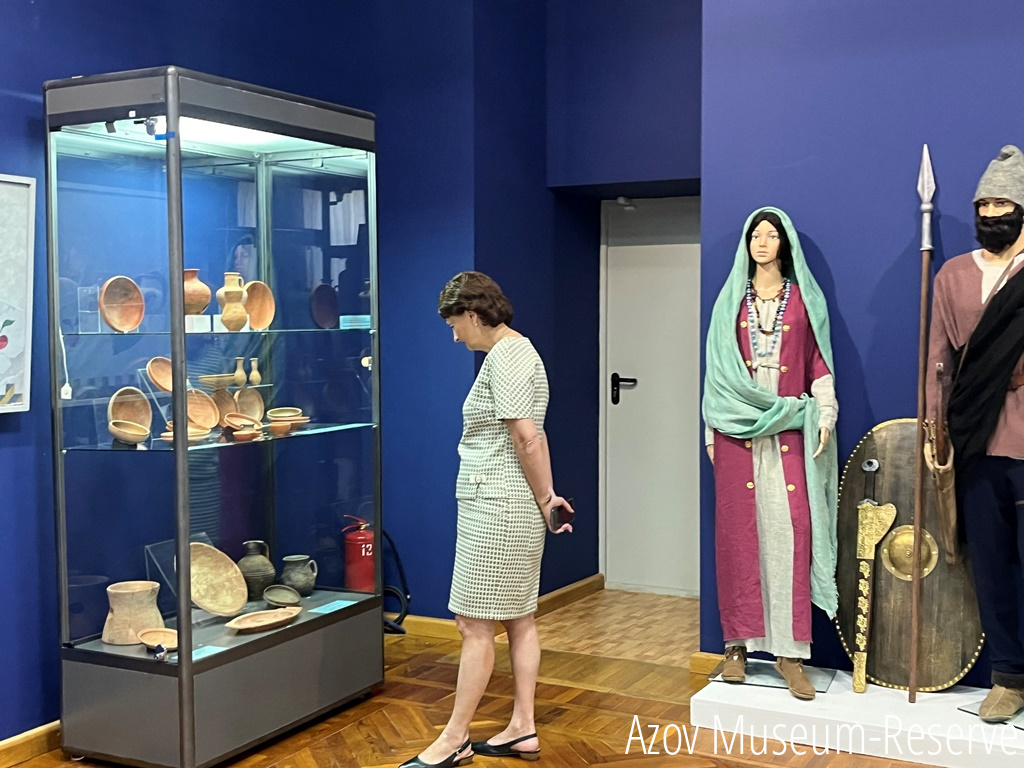
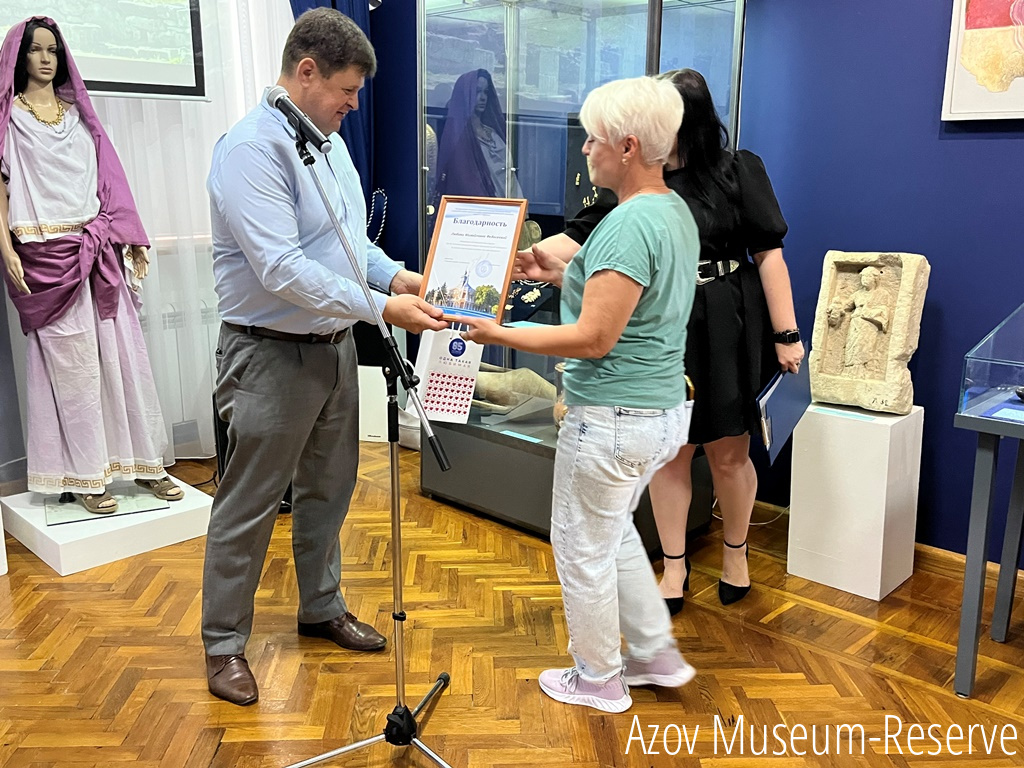
In March 2021, the State Budgetary Institution of the Republic of Crimea “East Crimean Historical and Cultural Preserve” launched a series of exhibitions entitled “The Magic of the Bosporus” at museums in the Russian Federation and the temporarily occupied territory of Crimea. The first such exhibition was held at the Sverdlovsk Regional Museum of Local Lore (Yekaterinburg, Russia) from March to August 2021, followed by an exhibition in at Tula Museum of Fine Arts (Tula, Russia) in August–October 2022, and the third one at the Crimean Ethnographic Museum (Simferopol) in August–December 2023; the latter was seized by the occupation authorities. On May 31, 2024, an archaeological exhibition of the same set of objects titled “On the Edge of the Oecumene” was opened at the Azov Museum Preserve (Azov, Russia).
The press releases of all exhibitions contained the same names of the monuments from which the objects came (the Ych-Oba (“Three Brothers”) barrow group, the Lower Dzhardzhava (“Tsementna Slobidka-1”), the elite barrow of the Lower Dzhardzhava group (“Hospitalnyi”), the Alexander Rocks necropolis, the ancient Pantikapaeum, one of the ancient sanctuaries of the Eastern Crimea. The number of objects put on display was also approximately the same – 300 items. The available photographs from the exhibitions in Yekaterinburg, Tula and Simferopol did not allow us to attribute most of the objects from the exhibitions.
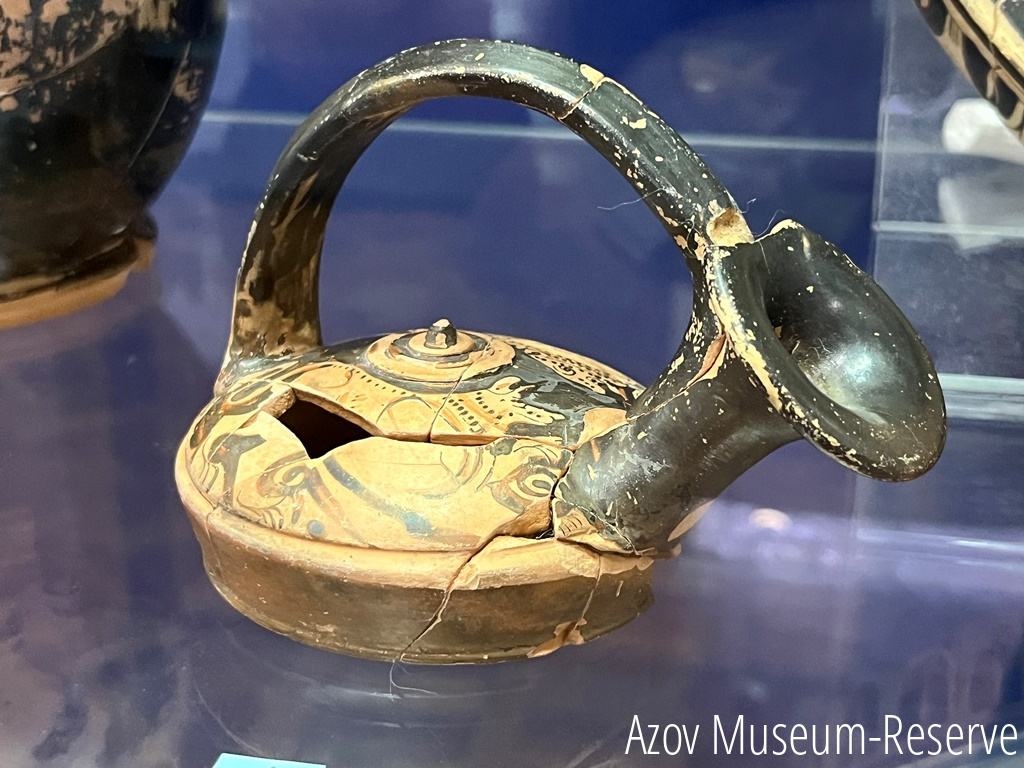
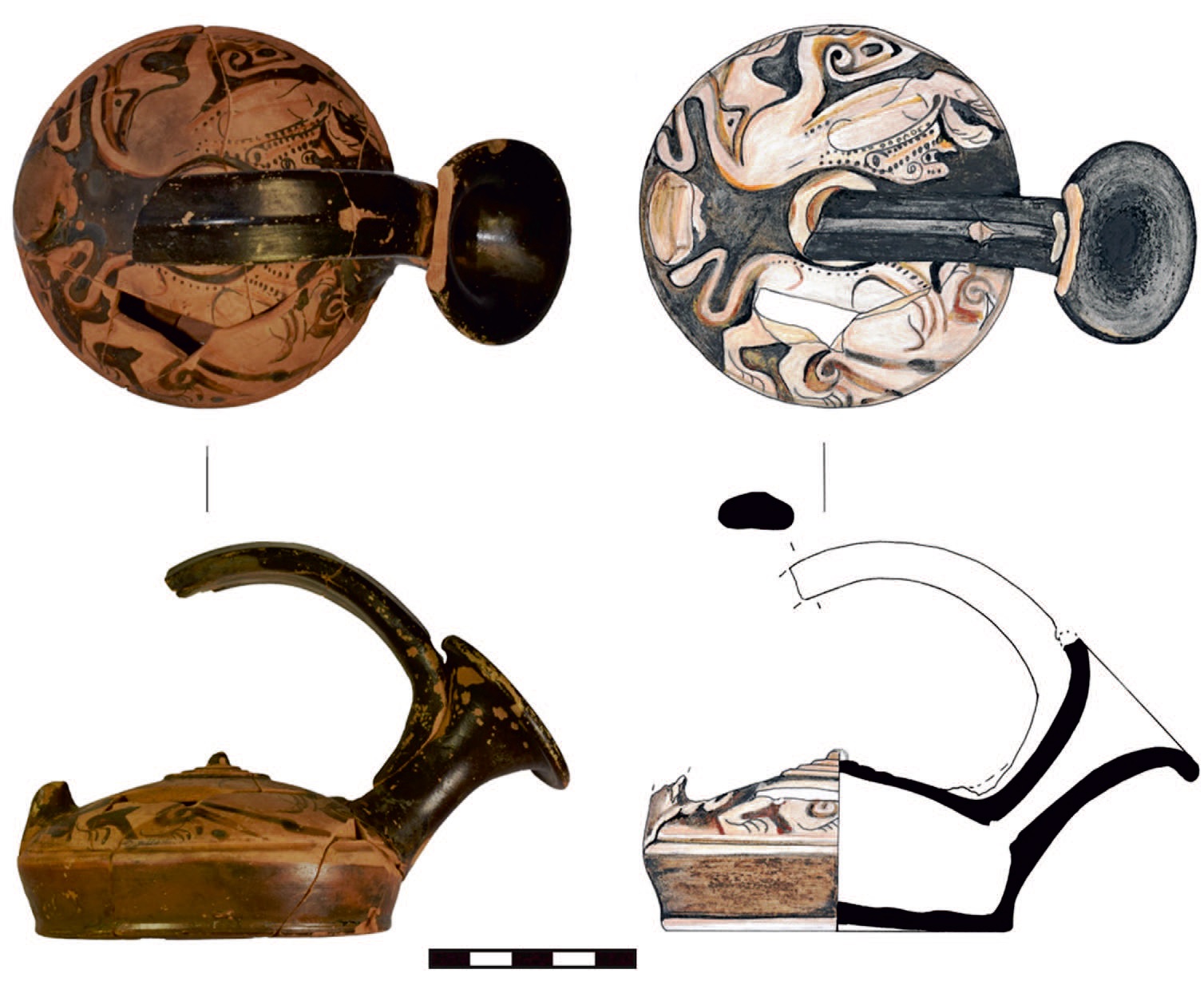
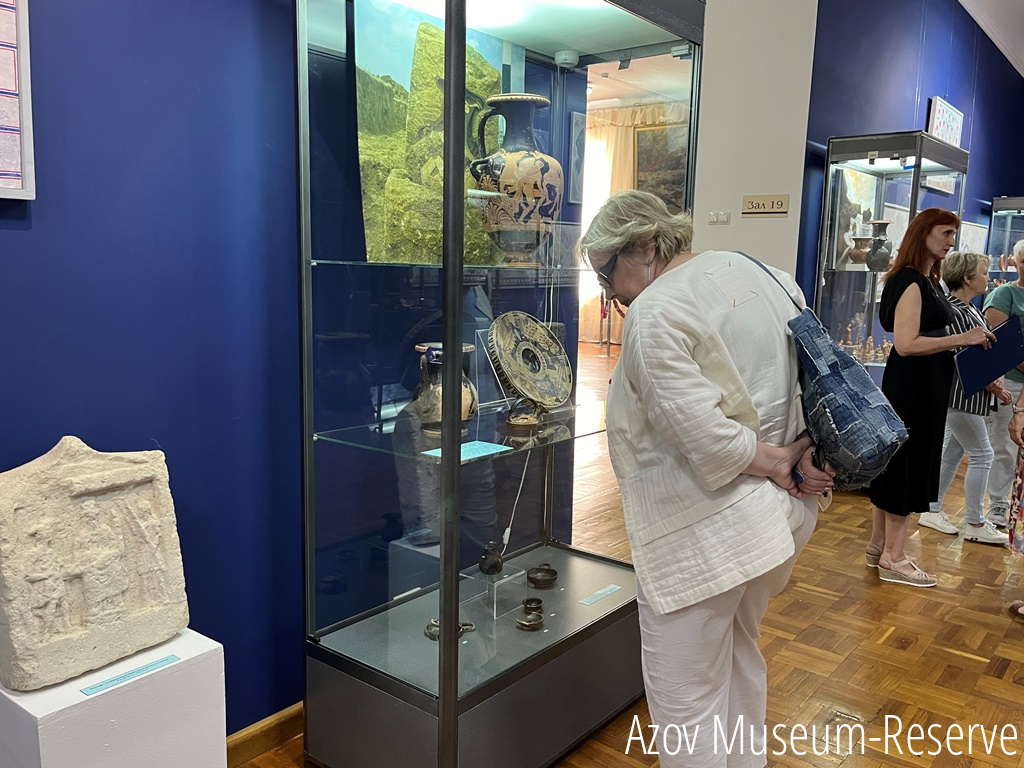
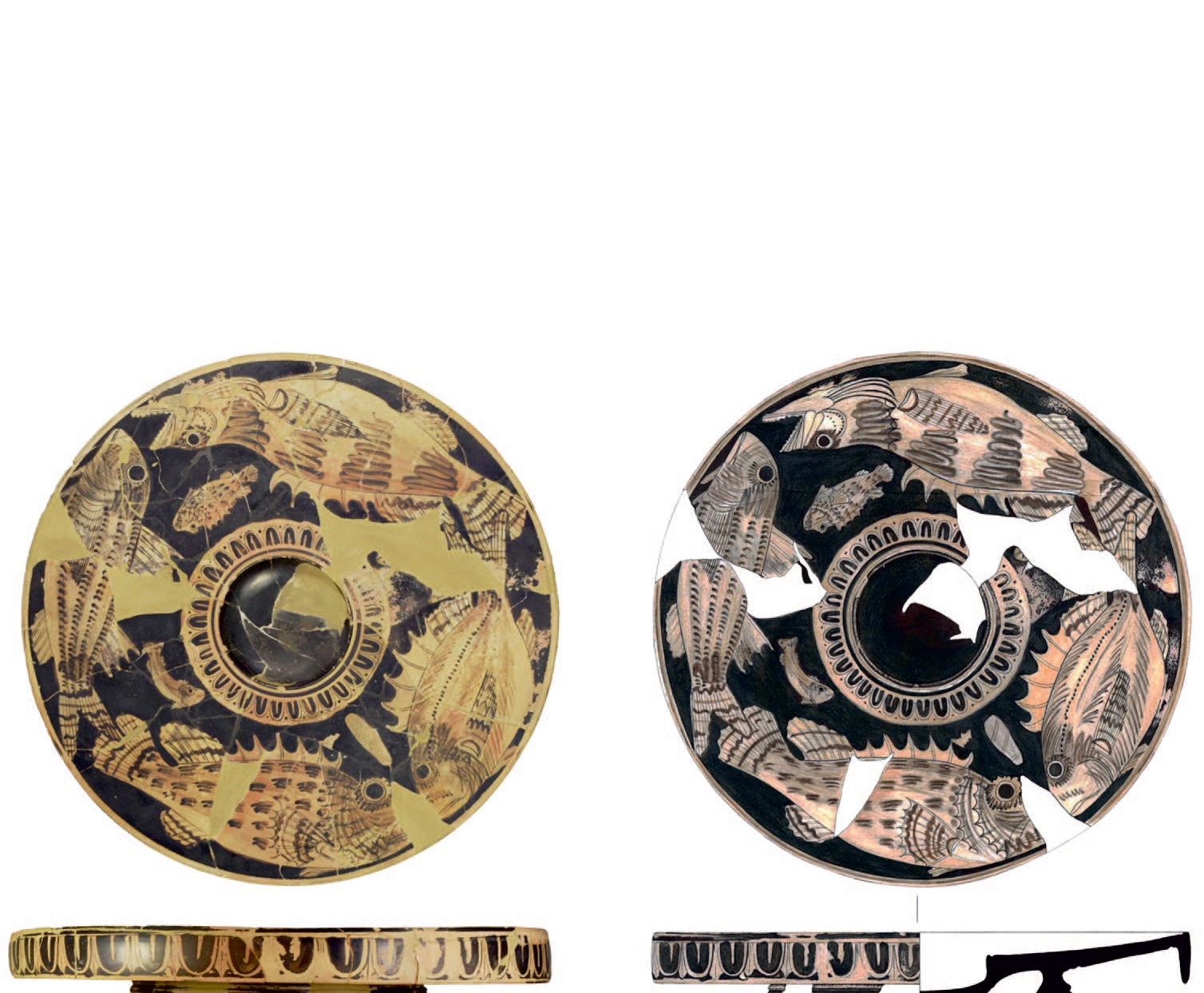
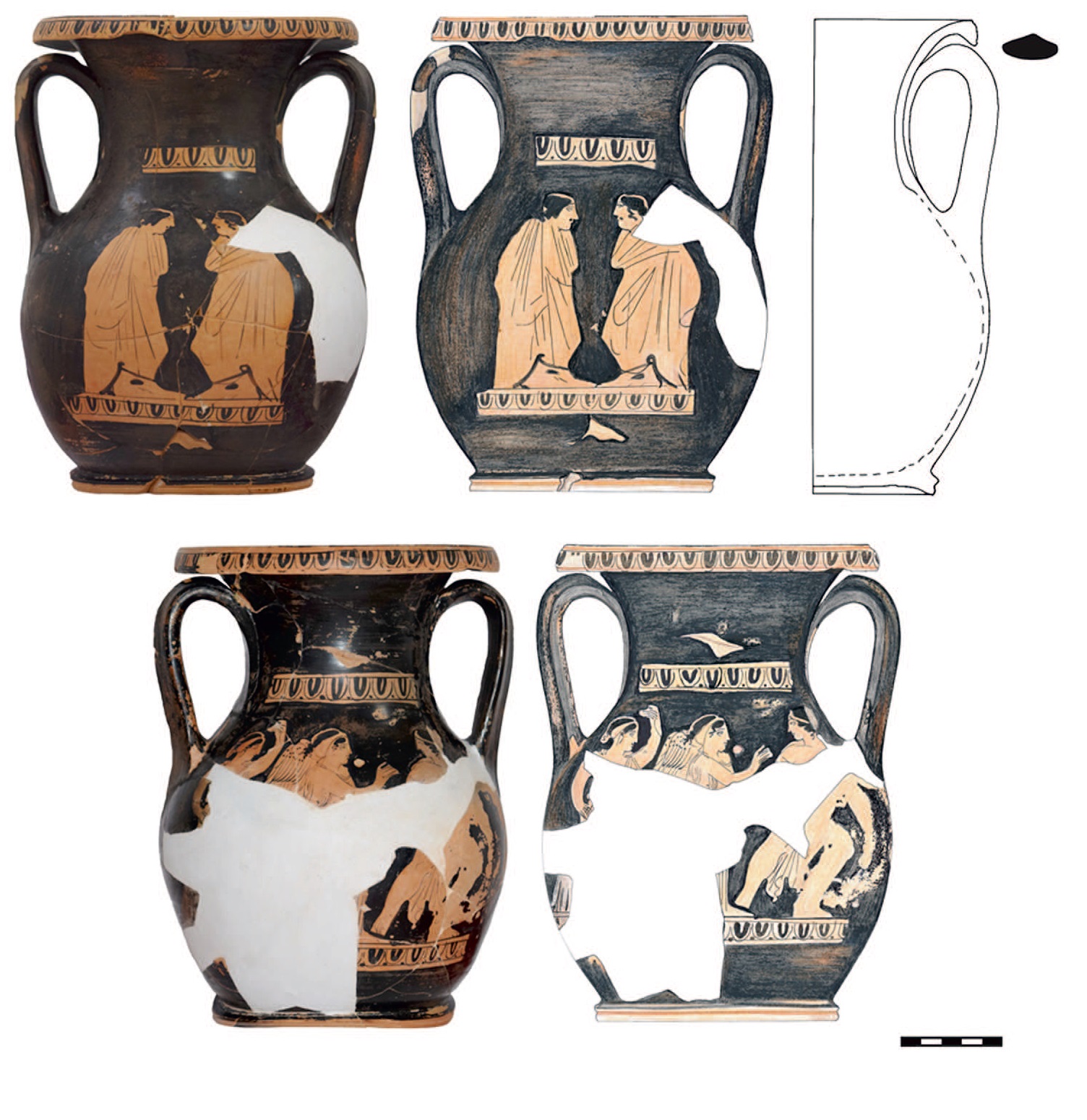
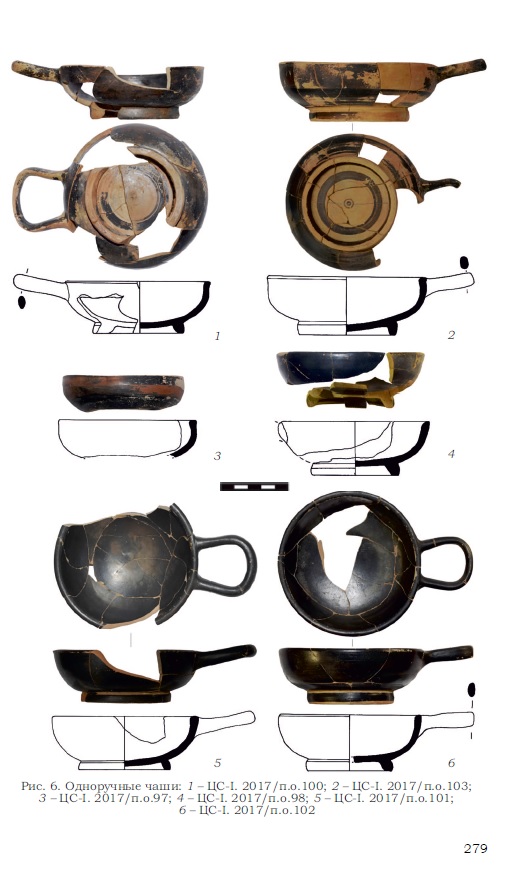
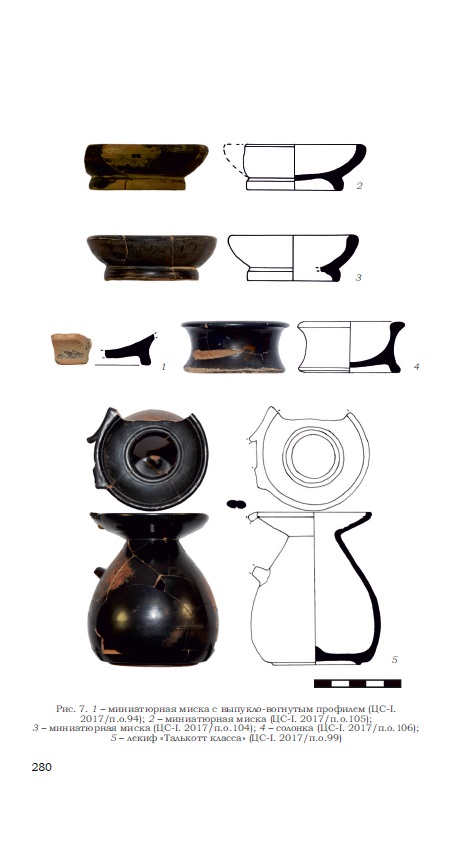
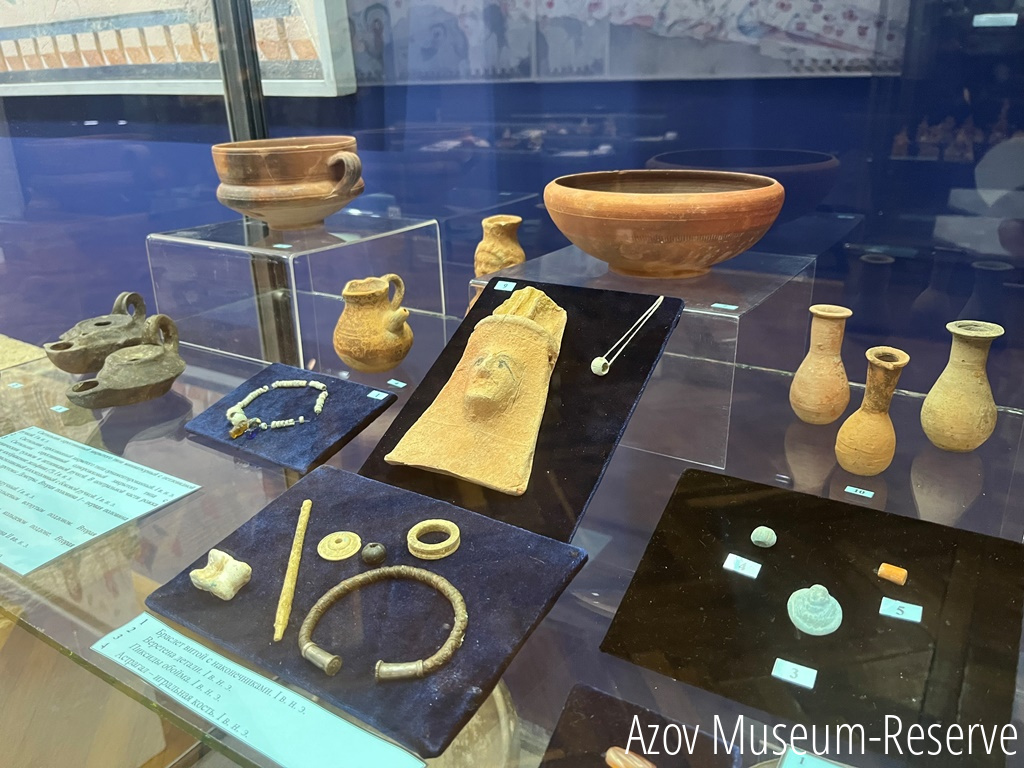
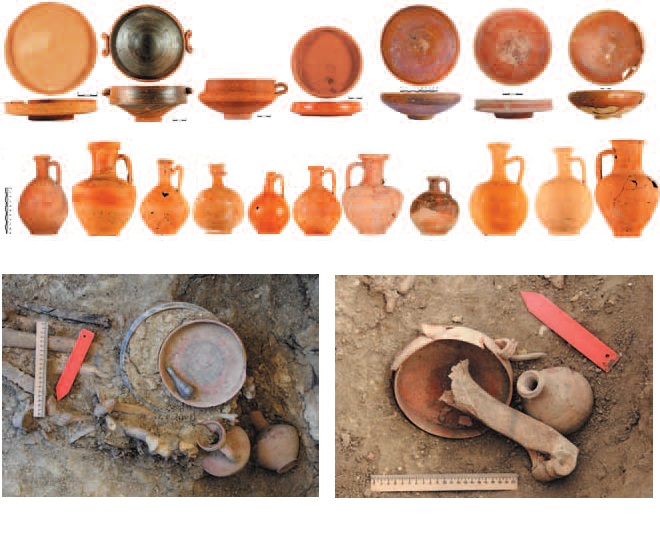
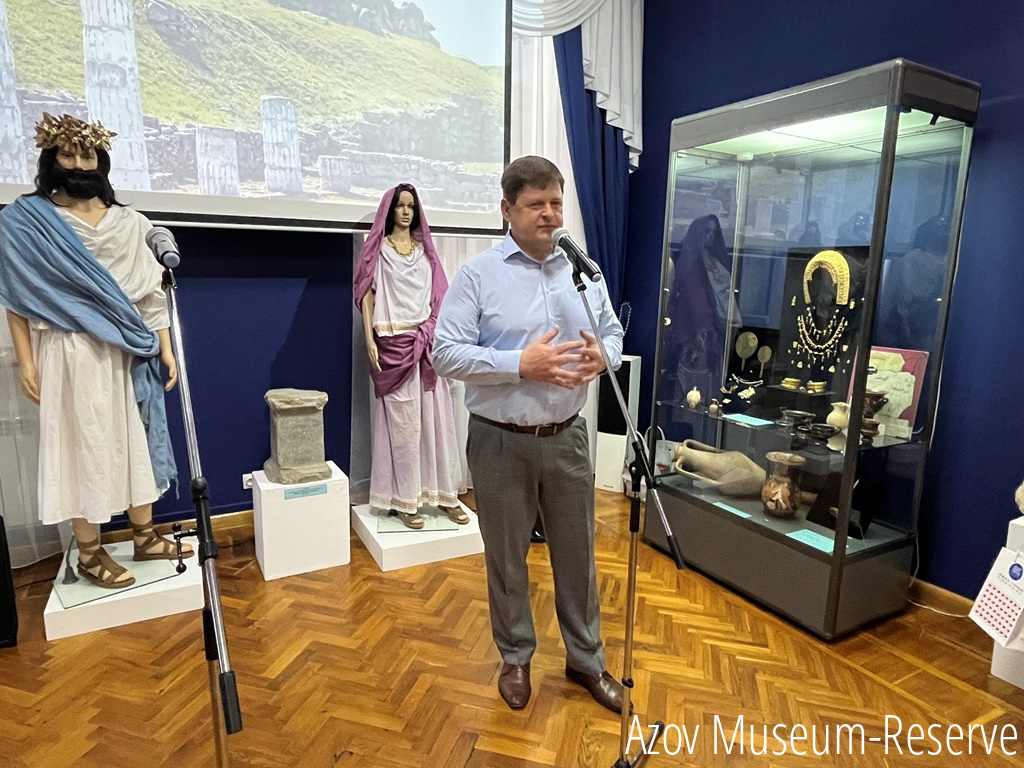
The exhibition at the Azov Museum Preserve was covered in detail on the institution’s website, which enabled us to identify items from the illegal archaeological excavations of barrow 2 of the Lower Dzhardzhava barrow group (“Tsementna Slobidka-1”): a red-figure askos (a small vessel with a rounded or, conversely, low and almost flat closed body) depicting lions (figures 1, 2), a red-figure fish dish depicting fish (figures 3, 4), a red-figure pelike (an ancient Greek vessel, widening towards the bottom (figures 3, 5), a black lacquer lekif (figures 3, 6) and black-lacquer vessels (one-handed bowls, miniature bowls (figures 3, 7). The barrow was illegally excavated in August–September 2017 by the archaeological team of ITTs Special Works LLC. It is part of the large mound necropolis of Pantikapaeum of the 4th–3rd centuries BC on Cape Ak-Burun. From the Alexander Rocks-1 necropolis, also subjected to illegal excavations “for demolition” in 2017 (the permit holder is Sergey Vnukov), comes a twisted bracelet with tips (figures 8, 9), a fragment of a relief vessel (figures 8, 10) and numerous red-lacquer and red-clay vessels (figures 8, 11, 12). These items were seized from illegal excavations after 2014 and could not be included in the state part of the Museum Fund of Ukraine.
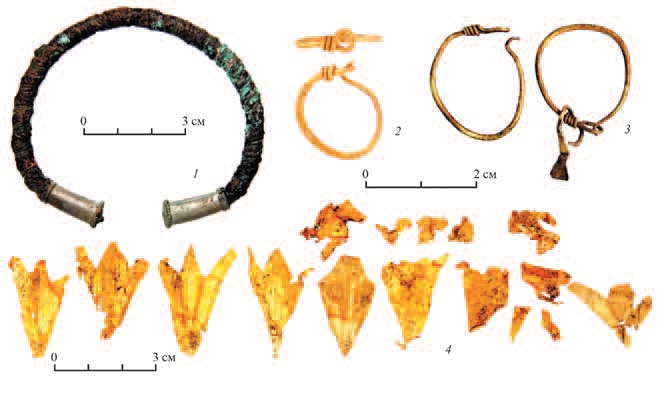
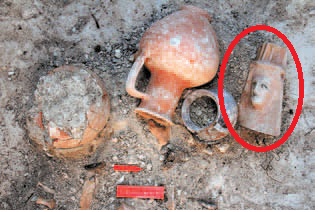
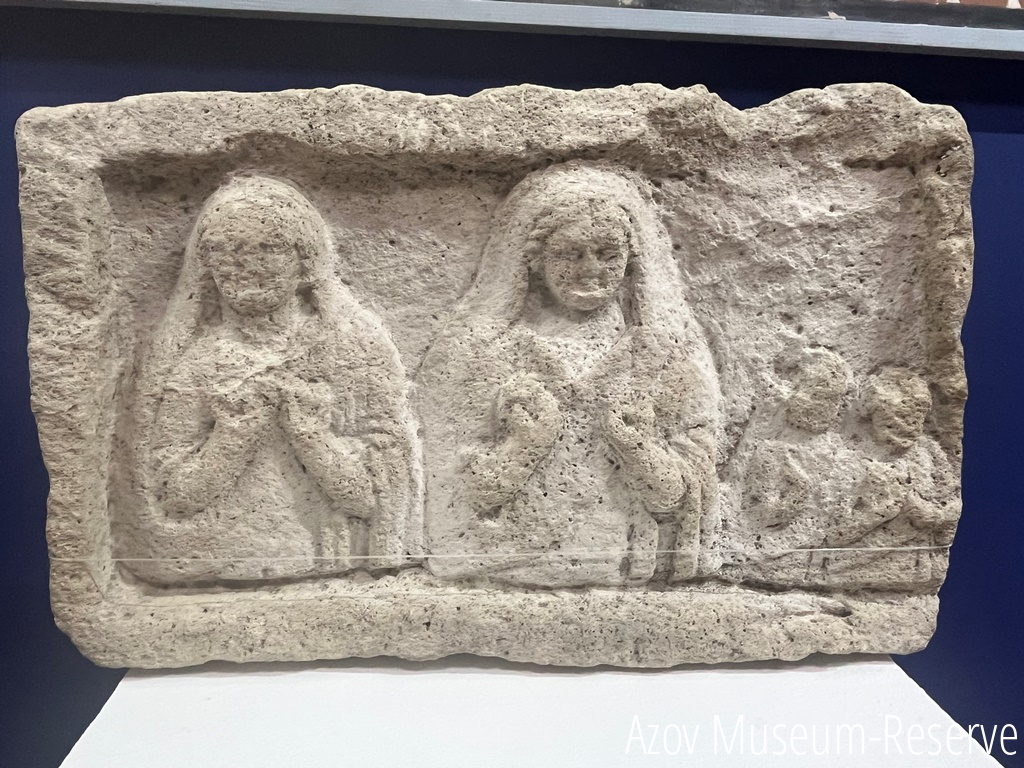
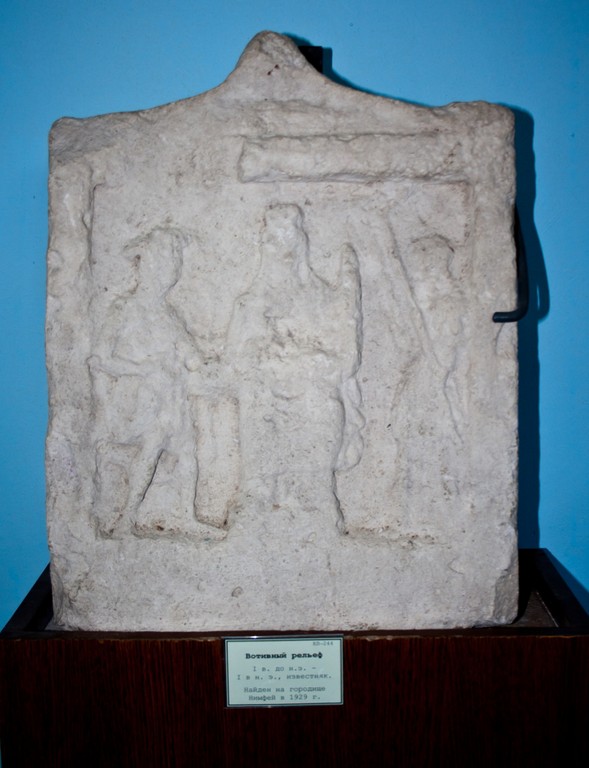
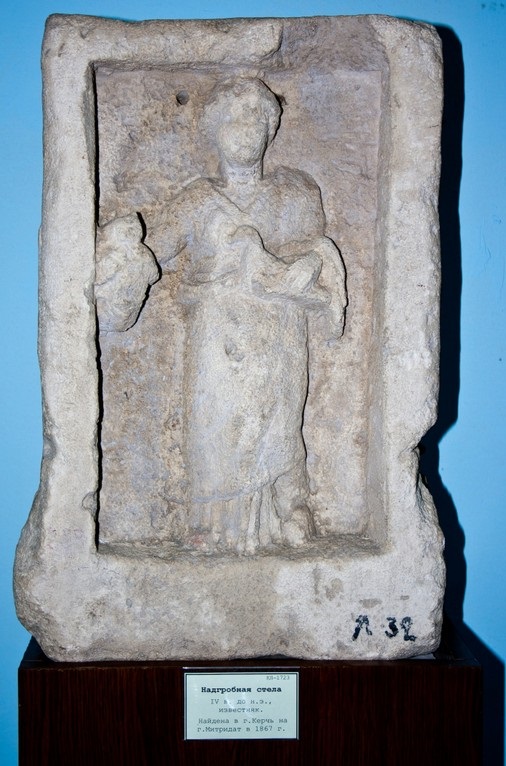
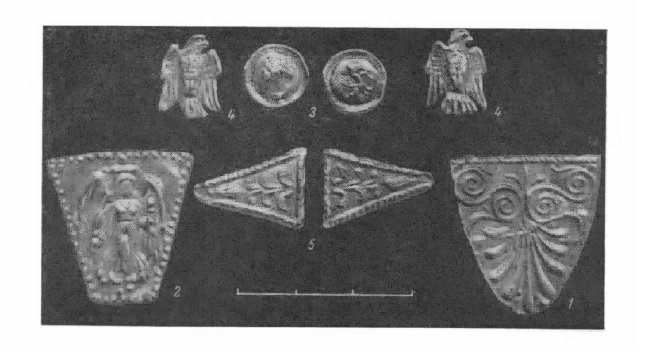
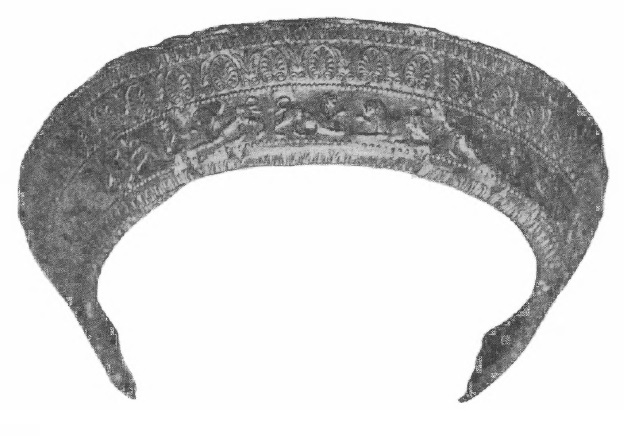
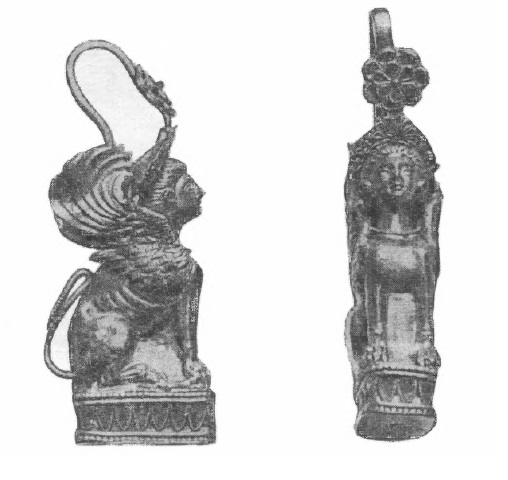
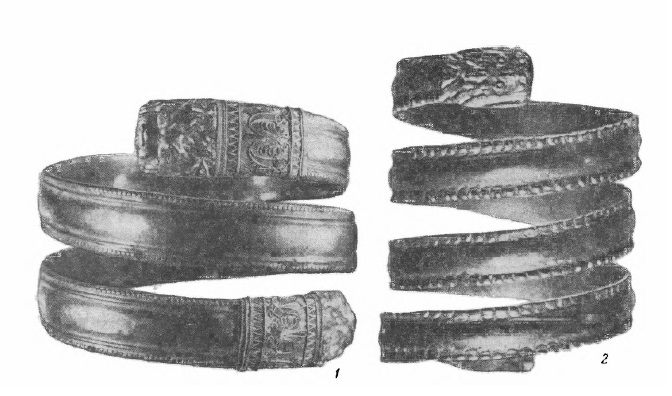
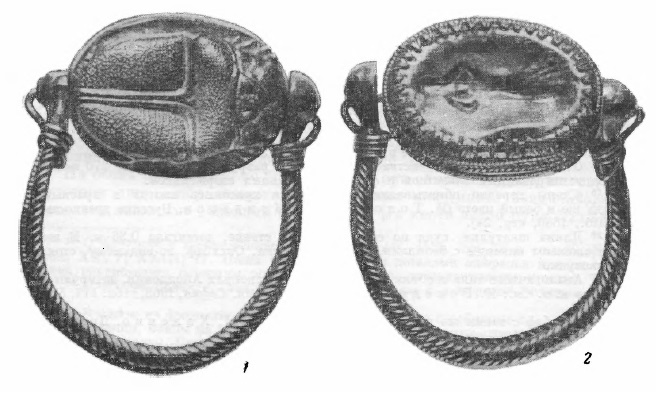
Other objects from the collection of the Kerch Historical and Cultural Preserve (a relief with Demeter and Cora (figure 13), a votive relief (figs. 3, 14), a tombstone (figures 15, 16) were exhibited for a long time in the lapidary hall of the institution and were legally registered as part of the museum property of Ukraine. In addition to the lapidary collection, a unique set of objects from the main burial of the “oldest” barrow of the Ych-Oba barrow group (“Three Brothers”) was brought to this exhibition. The set included earrings in the form of sphinxes, a golden tiara, the remains of a decorated calathus, a slipware vessel, and twisted bracelets (figs. 18-22).
The objects that were in the collection of the Kerch Museum-Reserve until 2014 were already included in the State Register of the Museum Fund of the Russian Federation by the occupation administration. This was the last step in a series of appropriations: from the creation of occupation institutions to the seizure of each storage unit. As for the objects from the illegal excavations in Crimea in 2014, they do not appear in the Russian inventory system with reference to the institution, which increases the possibility of them “not returning” from such exhibitions.
Gallery
Additional files
- Certificates for museum objects from the registration system of the Museum Fund of the Russian Federation – 4 items.
- Certificates for museum objects from the registration system of the Museum Fund of the Russian Federation – 4 items.
- Certificates for museum objects from the registration system of the Museum Fund of the Russian Federation – 4 items.
- Certificates for museum objects from the registration system of the Museum Fund of the Russian Federation – 4 items.
Involved persons
- Director-General of the occupation institution State Budgetary Institution of the Republic of Crimea “East Crimean Historical and Cultural Preserve” - Tatiana Umrikhina
- Director of the State Budgetary Institution of the Republic of Crimea “Azov Museum Preserve” - Yevgeniy Mamichev
- Chief curator of funds, chairman of the expert fund and procurement commission (EFPC), director of the State Budgetary Institution of the Russian Federation “Azov Museum Preserve” - Yelena Pestrikova
Video gallery
information is clarified
Sources
- “Order of the Council of Ministers of the Republic of Crimea” of October 22, 2014, No. 1095-r
- “Order of the Council of Ministers of the Republic of Crimea” of December 11, 2014, No. 1368-r
- T.V. Yegorova, S. M. Ilyashenko. (2023). Raspisnaya i chernolakovaya keramika iz kurgana 2 kurgannoy gruppy “Tsementnaya slobodka I” [Painted and black-lacquered ceramics from barrow 2 of the Tsementna Slobidka I barrow group]. Ancient World and Archeology: Interuniversity collection of scientific papers. Saratov: Nauchnaya Kniga Publishing House, Issue 21, p. 277
- Goroda, selishcha, mogilniki [Cities, settlements, necropolises]. Excavations 2017. Materials of rescue archaeological research. Vol. 25, pp. 27–28.
- (I.V. Rukavishnikova, D. V. Beilin, N. F. Fedoseyev (†), I. V. Yakubovskaya (2019). Raskopki kurgana Gospitalnyy v Kerchi [Excavations of the Hospitalnyi barrow in Kerch]. Crimea - Taurida. Archaeological excavations in the Crimea in 2017–2018, in 2 vols. Vol. 1, pp. 13-62.
- Kirilin D. S. (1968). Trekhbratniye kurgany v rayone Tobechikskogo ozera [Three Brothers barrows in the area of Lake Tobechik]. Antique History and Culture of the Medium Middle Moreau and the Black Sea, pp. 178–188.
- Order of the Ministry of Culture of Russia dated July 23, 2020 No. 827 (as amended on August 26, 2021) “On approval of the Unified Rules for the organization of acquisition, inventory, storage and use of museum objects and museum collections”
Links
- The magic of the Bosporus: https://uole-museum.ru/events/magiya-bospora/
- Tula Museum of Fine Arts. Journey to the magic of the Bosporus: https://www.museum-tula.ru/muzei/tmii/afisha/11664/
- The exhibition “The Magic of the Bosporus” opens in Simferopol: https://mir-info.com/nations/magija-bospora
- On the edge of the ocean: https://azovmuseum.ru/exhibition/40635.html
- THE CULT OF DEMETER IN THE BOSPORUS: https://kerchmuseum.ru/ru/publish/kult-demetry-na-bospore.html
- Kerch lapidary: https://xn--b1agjg5a5b.xn--p1ai/viewtopic.php?f=11&t=386&start=10
- Digital copies of objects from the “oldest” barrow of the Ych-Oba barrow group on the website of the National Museum of History of Ukraine https://ua.museum-digital.org/series/210