General information
Location
Kind of cultural heritage
Object of architectureObject type
СonstructionsResearch zone
Donetsk regionMap
Object history and violation description
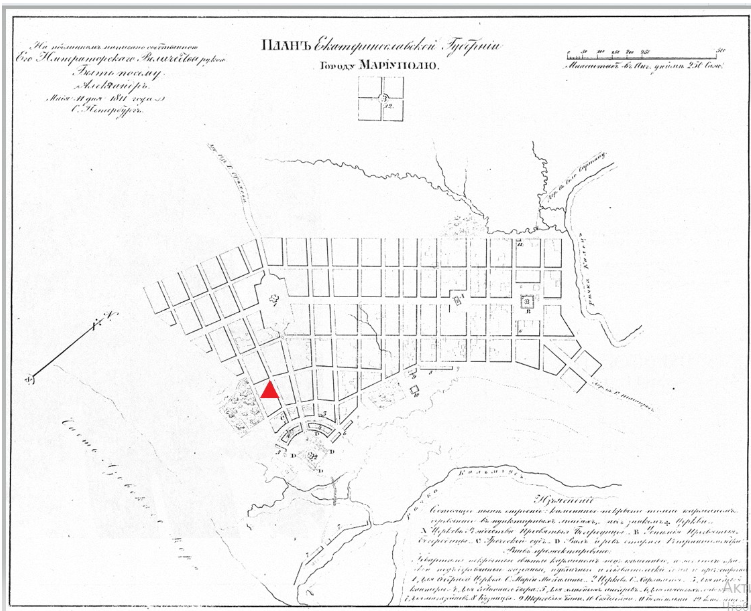
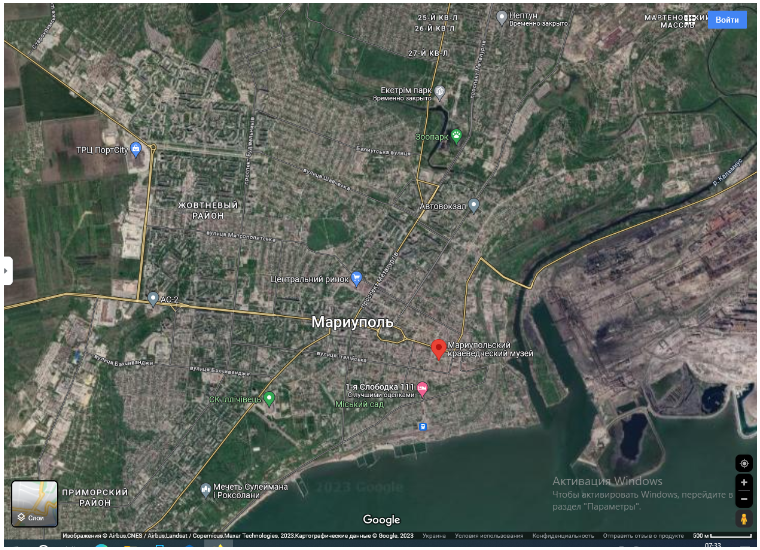
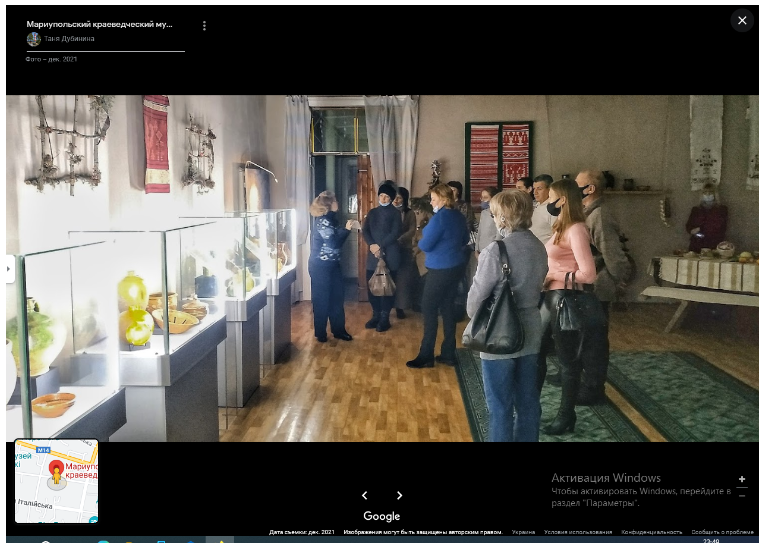
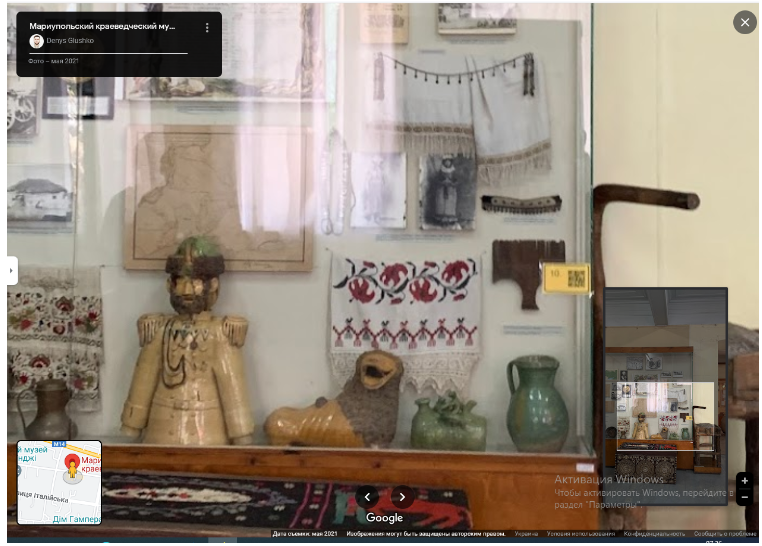
The historic center of Mariupol is located on the right bank of the Kalmius. At the mouth of this river, a fortified Cossack settlement – the Kalmius fortress – emerged and functioned in the 17th and 18th centuries, as evidenced by cartographic data and excavation materials (1, 2) (picture No. 2). As it usually happens, the city around the fortress grew over time. The central part of the city was formed between the present-day Italian and Fontanna streets. One of the historic streets of Mariupol is Heorhiivska Street, where the Mariupol Museum of Local Lore was housed in the building of the educational and craft shelter for disabled soldiers of World War I. On 28 November 1916, a social adaptation center was unveiled in the new building, almost in the center of the city. However, the events of the 1917 revolution and the Bolshevik coup led to the rapid decline of this noble cause. The emergence of the museum is connected with the functioning of the Ukrainian Society and the public education subsection of the county zemstvo in the building from 1917 to the 1920s, where a group of antiquity lovers was formed at the non-formal education section. Thanks to the zeal of Ivan Kovalenko (1887–1949), an enthusiast of historical studies in Azov region, who began collecting the first historical items for the would-be museum collection before 1917, the groundwork of the future museum, the Mariupol Society for the Study of Local Region, was laid and strengthened (3).
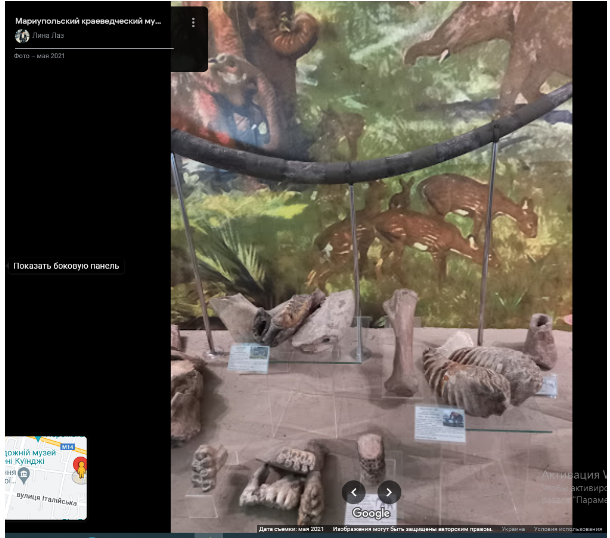
The official date of the museum's foundation is 6 February 1920, making it the earliest functional museum in Donetsk oblast as of 2022. Having received the entire building at its disposal, the museum quickly turned into a powerful regional center for scientific and educational work. In the 1930s, the Mariupol Museum had the status of the main regional museum, conducting archaeological and ethnographic research, as well as collecting geological and paleontological materials throughout the region (modern Luhansk and Donetsk oblasts). The natural science research of the museum staff was of great scientific importance. The results of these studies became the basis for the creation in 1926–1927 of the Khomutovskyi Step, Bilosarai Spit and Kamiana Mohyla nature reserves, which were subordinated to the museum.
During World War II, the museum was not evacuated by any of the warring parties and thus worked even under occupation, shifting the emphasis of its exposition for that period. During the battles for the city in 1941–1943, the museum building did not suffer significant losses (2). Further development of the museum in the period from 1950 to 1992 was accompanied by a rapid increase in the number of items in storage. Nonetheless, the exposition for a long time had a standard structure for Soviet-era museums, which did not provide for flexibility in the format of exhibits and did not always take into account the attractiveness and scientific significance of some collections or individual items. The exposition was focused on familiarizing visitors with the nature and archeology of Azov region and its history in pre-Soviet and Soviet times.
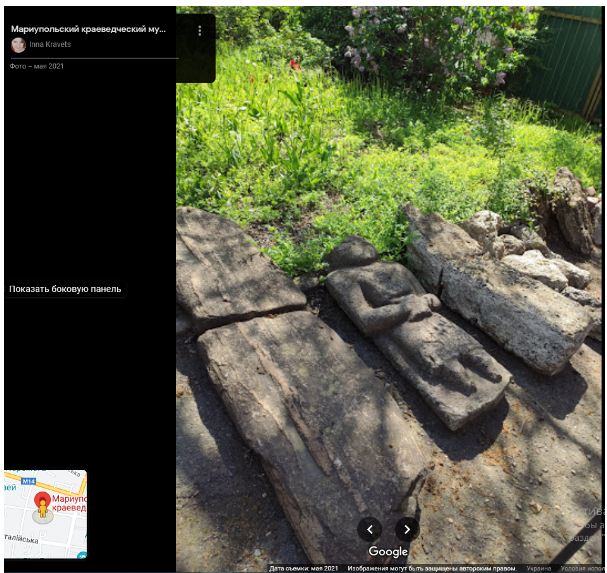
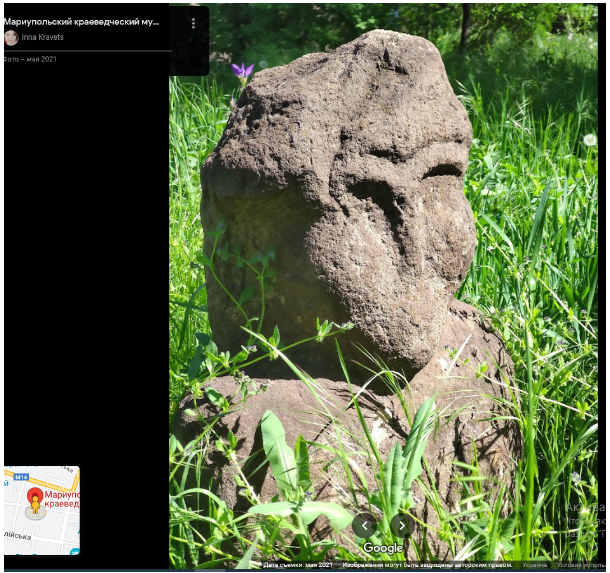
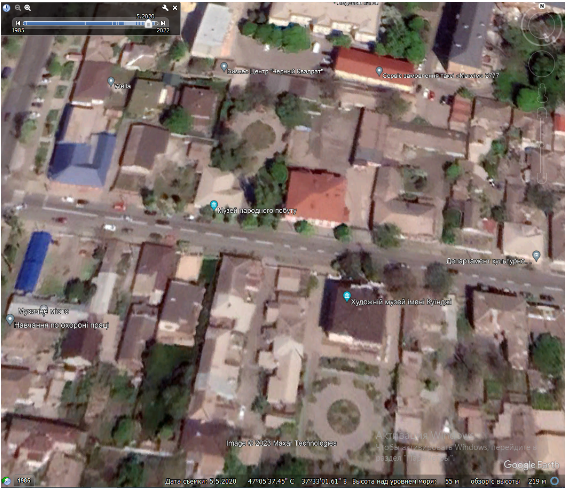
The situation began to change drastically during Perestroika and after Ukraine gained independence. In 1987, near Mariupol, in Sartana village, which was founded by Greeks during their forced resettlement from the Crimean Khanate in 1778–1780, a branch of the Mariupol Museum of Local Lore, the Museum of the History of the Greeks of Pryazovia, was established at the initiative of the Greek diaspora, which presents the history of the development of the new region, the peculiarities of the Greek economy and cultural traditions. Besides, in 1989, a branch of the Museum of Folk Life was created in the historic development area of Mariupol, at 55 Heorhiivska Street, where the culture of Ukrainians, Greeks, Germans, and Jews is represented. Next to it, in 2010, the A.I. Kuindzhi Art Museum was set up in a former private mansion built in 1902 to expand the exposition of the art collection of the local lore museum. Mariupol residents got the opportunity to host mobile art exhibitions and organize centralized displays of works by local contemporary artists after the opening of the next branch of the local lore museum – the A.I. Kuindzhi Exhibition Hall (6), at 35 Metallurgists Avenue. Concurrently, the museum's collections continued to be replenished with materials from archaeological excavations conducted in the city and its surroundings under the leadership of V. N. Gorbov (7). Of great scientific importance was the collection of ancient stone items, such as menhirs of the Bronze Age and Cuman sculptures, whose number reached 40 units in 2022 (4) (pictures 10; 11). As of 2022, the total number of items stored exceeded 53,000, in addition to 17,000 books kept in the museum's research library (14). Judging from the above, we can see that at the beginning of Russia's hybrid war against Ukraine in 2014, the Local Lore Museum in Mariupol was steadily developing as a scientific, educational and cultural center.
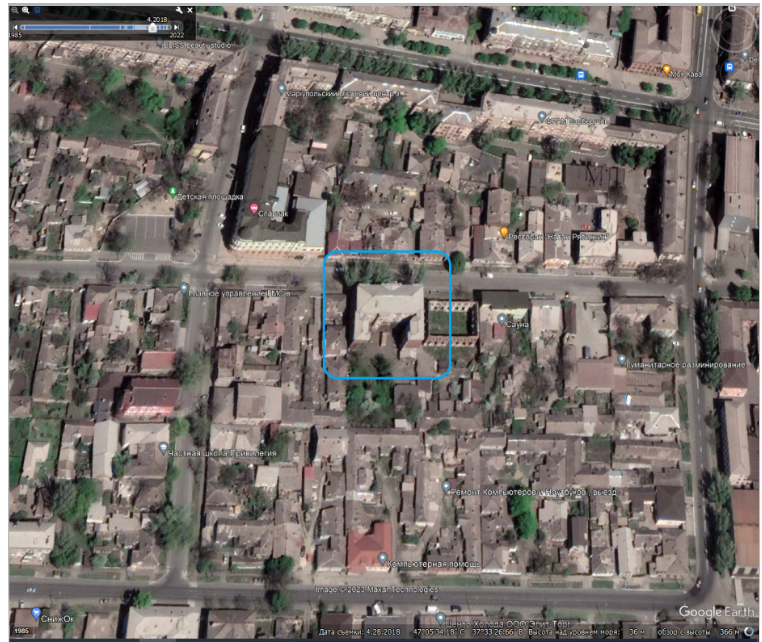
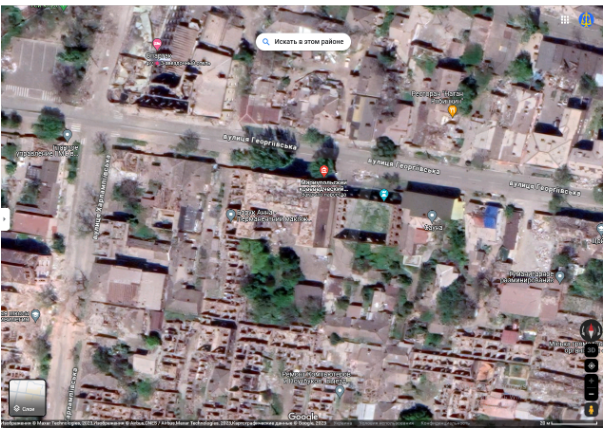
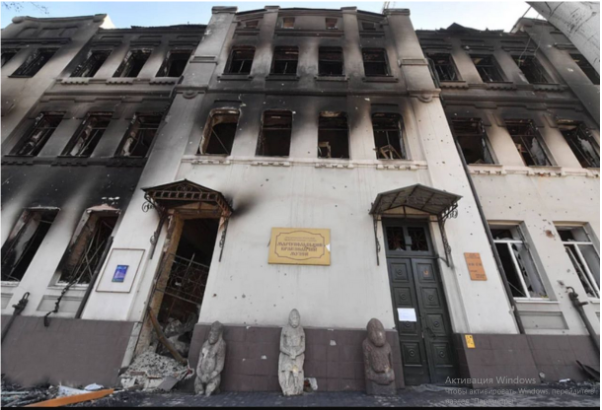
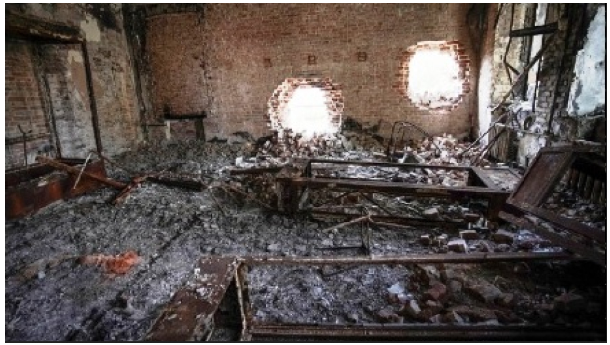
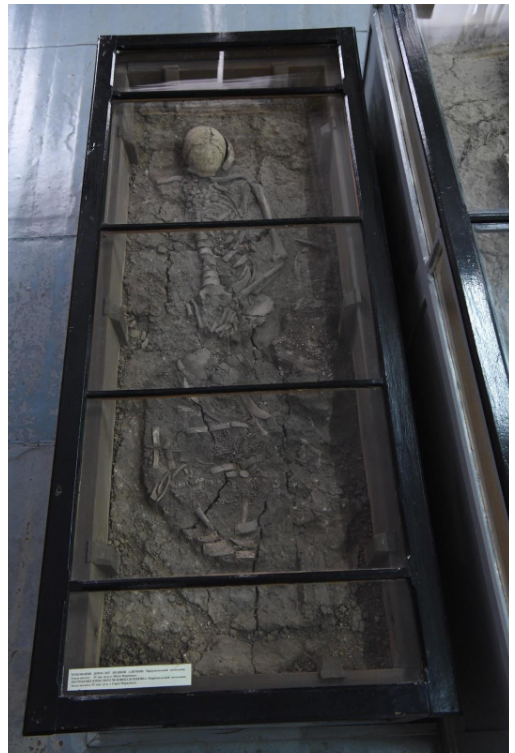
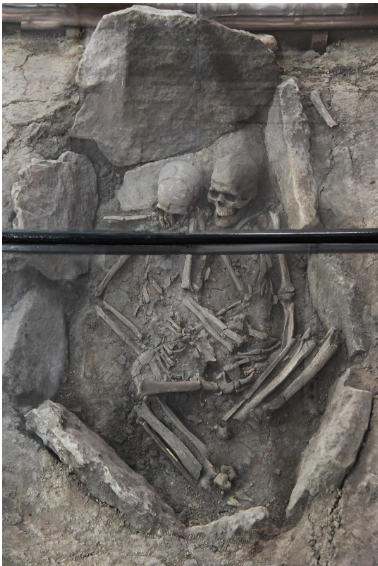
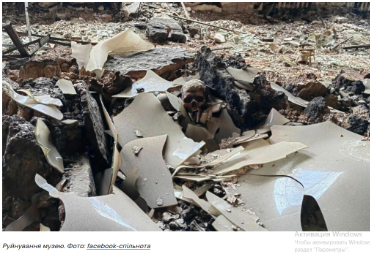
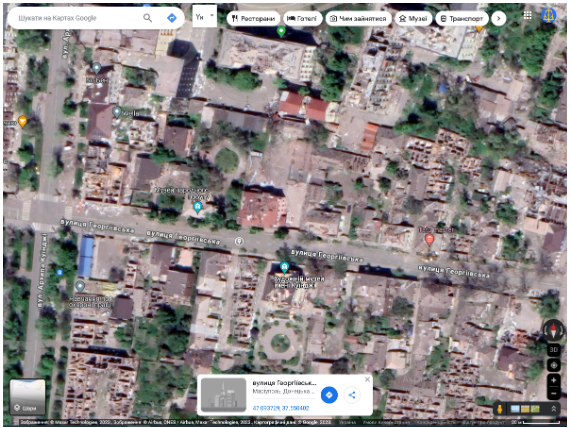
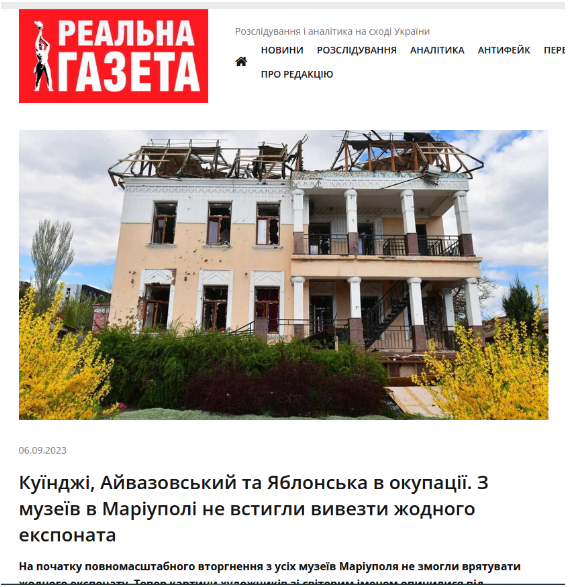
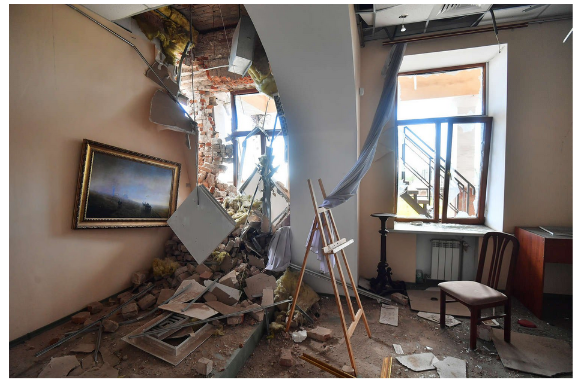
After the outbreak of the full-scale invasion of Ukraine by the Russian armed forces, the Mariupol Museum of Local Lore and its branches suffered devastating losses. On 21 March, the A.I. Kuindzhi Museum was heavily damaged by a shell. The fate of a significant part of the collection of artworks is unknown (5; 6; 8) (pictures 21; 22). On 16 April, a fire broke out in the main building of the museum as a result of numerous hits, destroying the exhibition halls and almost all the collections (5; 6; 7; 9. pictures 13; 14; 17). Part of the museum collection, which miraculously survived, was moved to Donetsk city (see video). Some items from the museum's archaeological collection were moved to the territory of the Russian Federation, including some materials from the excavations of the Mariupol Neolithic necropolis (9, picture 23). The Museum of Folk Life was also destroyed, as evidenced by satellite images (picture 20). The fate of its collection is unknown.
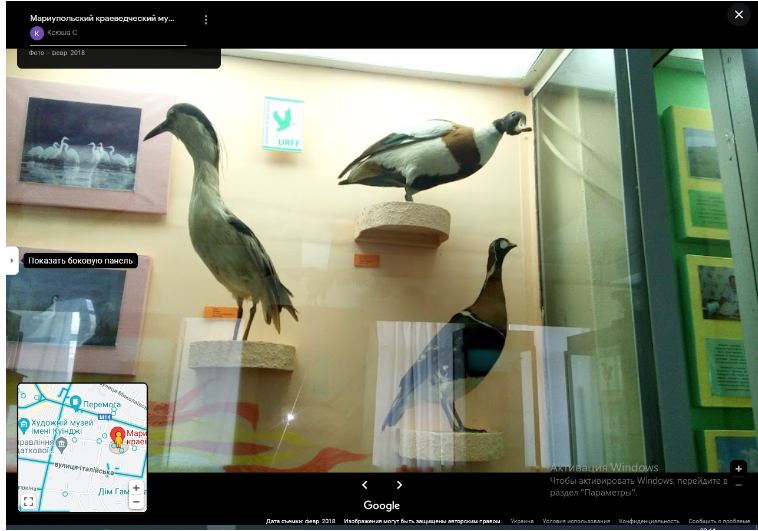
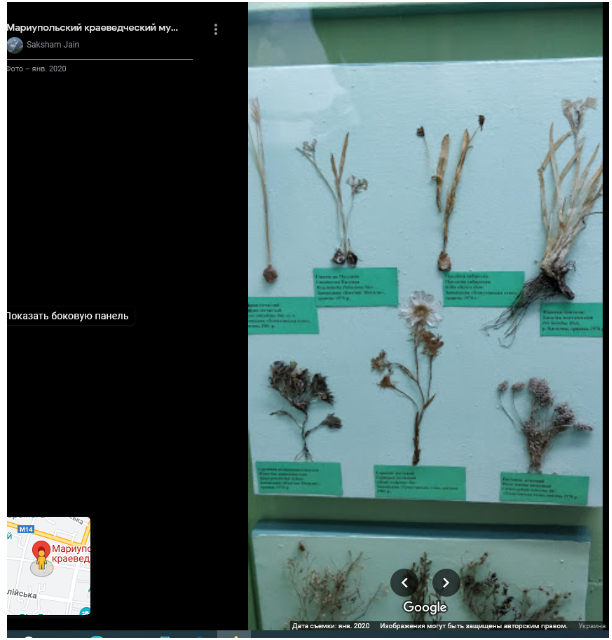
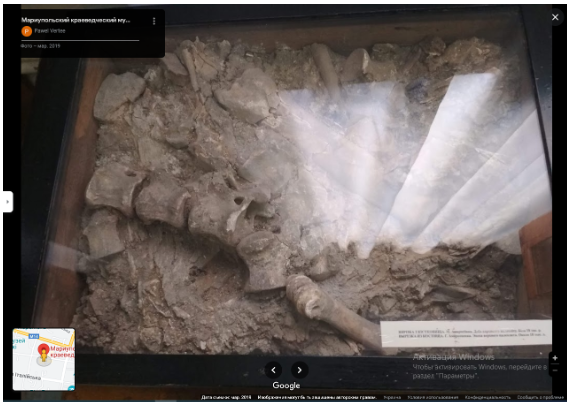
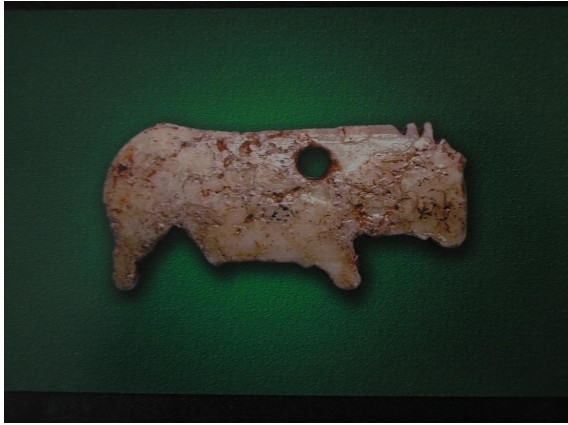
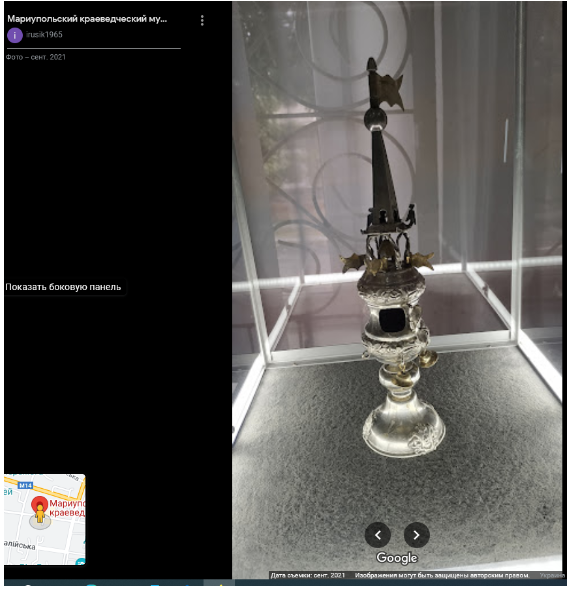
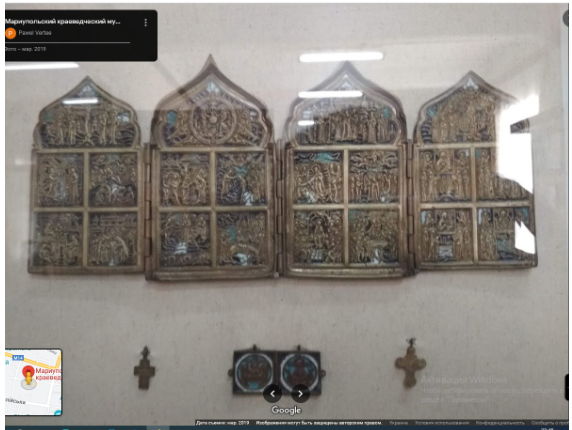
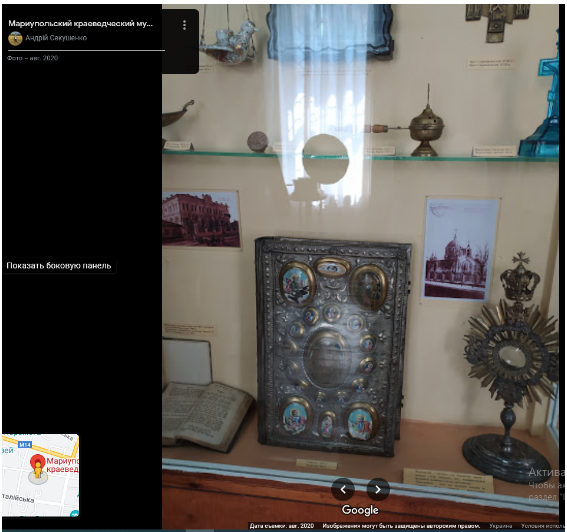
The irreversible losses for Ukraine's culture and science as a result of the destruction of the Mariupol Museum of Local Lore by the Russian armed forces that attacked the city are catastrophic. The fire destroyed the results of the work of several generations of scientists, including unique natural history collections, whose restoration is impossible due to the significant inversion of flora and fauna species that has occurred in Northern Azov Sea region over the past 100 years under the influence of anthropogenic pressure and climate change (11); unique archaeological materials of international importance, such as fragments from Neolithic and Bronze Age burials from the Mariupol necropolis (9), (pictures No. 15–17) and a fragment from the Amvrosiivka bone bed (picture No. 18), unique historical items and documents of the 16th–19th centuries, such as the 1779 letter of Empress Catherine II on the forced resettlement of Greeks from Crimea, personal belongings of prominent personalities of the city and historical religious items (pictures No. 24–26).
Gallery
Additional files
information is clarified
Involved persons
information is clarified
Video gallery
Sources
information is clarified
Links
- Gorbov V.M., Bozhko R.P. KALMIUS FORTRESS AND OLD MARIUPOL ACCORDING TO ARCHAEOLOGICAL AND WRITTEN SOURCES
- Mariupol Local Lore Museum. History of the building
- PRIN M.O. Mariupol Museum of Local History in the Soviet museum network in the 1920s - early 1930s
- In the courtyard of the Museum of Local History, you can see exhibits that are more than five thousand years old
- "If compared with the Second World War, the destruction is greater." An employee of the museum in Mariupol about the team and exhibits given to the Russians
- "Vandals climbed with flashlights": the details of the robbery of Mariupol museums were revealed (photo)
- The Russian Federation stole the surviving exhibits: the shelled Mariupol museum was shown from the inside
- "The fire did not burn the works, but they were handed over to the occupiers." History of Kuindzhi Museum in Mariupol
- DESTROYED TWICE. THE MARIUPOL NEOLITHIC CEMETERY IS NOT GOOD
- Occupiers destroyed an archaeological site in Mariupol (photo)
- Mammals of northeastern Ukraine: changes in the fauna and knowledge of its composition from O. Chernyi's survey (1853) to the present
- Mariupol war crimes catalog
- How many civilians died in Mariupol: a deputy of the city council called a terrible figure
- Mariupol Local Lore Museum