General information
Location
Autonomous Republic of Crimea
Kind of cultural heritage
ArchaeologicalObject type
ComplexesResearch zone
Autonomous Republic of CrimeaObject history and violation description
The Kerch Fortress is one of the first markers of the military intervention of the Russian Empire on the Crimean Peninsula. It is located next to the remains of the Turkish fortress of Yeni-Kale. The first Russian fortifications on the shore of the Kerch Strait were built in 1771, The fortress being unable to accommodate allied troops during the Crimean War, a camp of French troops was set up on its territory in 1855. Pursuant to the Paris Peace Treaty, the Russian Empire was forbidden from maintaining a fleet and military ports and to build fortresses on the coast. In 1856, Russia began the construction of a new fortress. In 1859, the director of the engineering department of the military ministry of the empire, Eduard Totleben, took control of the construction.
In Soviet times, military warehouses with property and ammunition of the Black Sea Fleet were situated on the territory of the fortress. After World War II, a disciplinary battalion was stationed here. In the wake of the collapse of the USSR, military units saw a cutback, and in 2000, the territory of the fortress was transferred to the Kerch State Historical and Cultural Reserve.
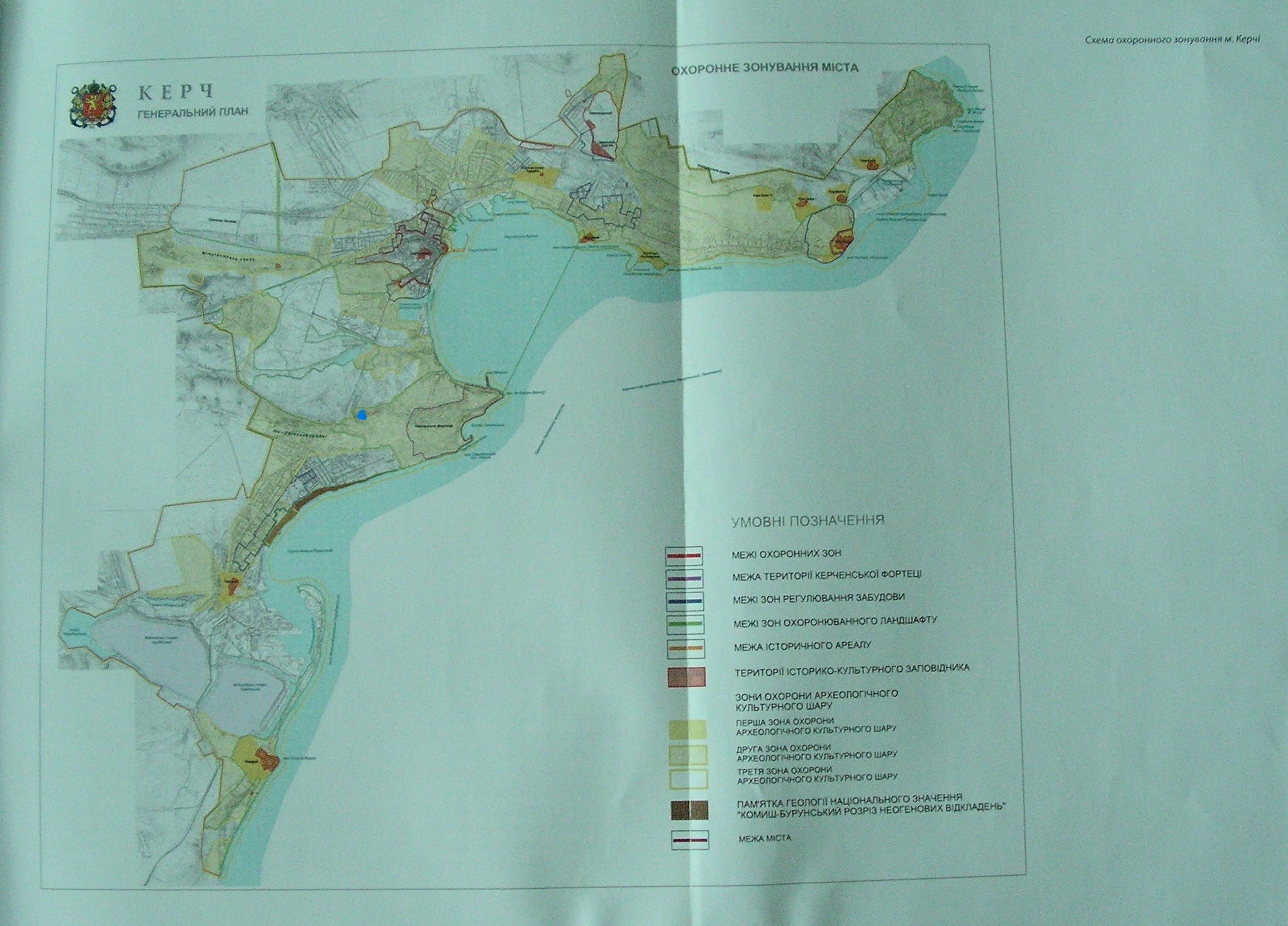
In 2009, the Complex of Buildings of the Kerch Fortress was entered into the State Register of Immovable Monuments of Ukraine by Resolution of the Cabinet of Ministers of Ukraine No. 928 dated September 3, 2009 as a monument of national importance. The protection zones were approved by the order of the Ministry of Culture and Tourism of Ukraine No. 58/0/16-10 dated February 3, 2010.
The appropriation of the monument by the occupation authorities was approved by the Decree of the Government of the Russian Federation dated October 17, 2015 No. 2073. The borders of the territory were determined by the occupation authorities in the order of the so-called State Committee for the Protection of Cultural Heritage of the Republic of Crimea dated December 9, 2019 No. 427.
During illegal archaeological works in 2022, carried out by the Crimean Regional Center for Archaeological Research LLC (director – O. V. Sharapa) based on the permit (open letter) dated February 25, 2022 No. 0110-2022, issued by the Ministry of Culture of the Russian Federation in the name of V. Kononov, an archaeological heritage site was discovered on the territory of the fortress. The occupying cultural heritage management authorities named it “Area of the cinder heap of the Totleben Fort, 19th century.”
The boundaries of the territory of the newly discovered archaeological heritage site “Area of the cinder heap of the Totleben Fort, 19th century” were approved by the order of the so-called Ministry of Culture of the Republic of Crimea dated March 24, 2023 No. 80-OKN “On the newly discovered archaeological heritage site ‘Area of the cinder heap of the Totleben Fort, 19th century.’”
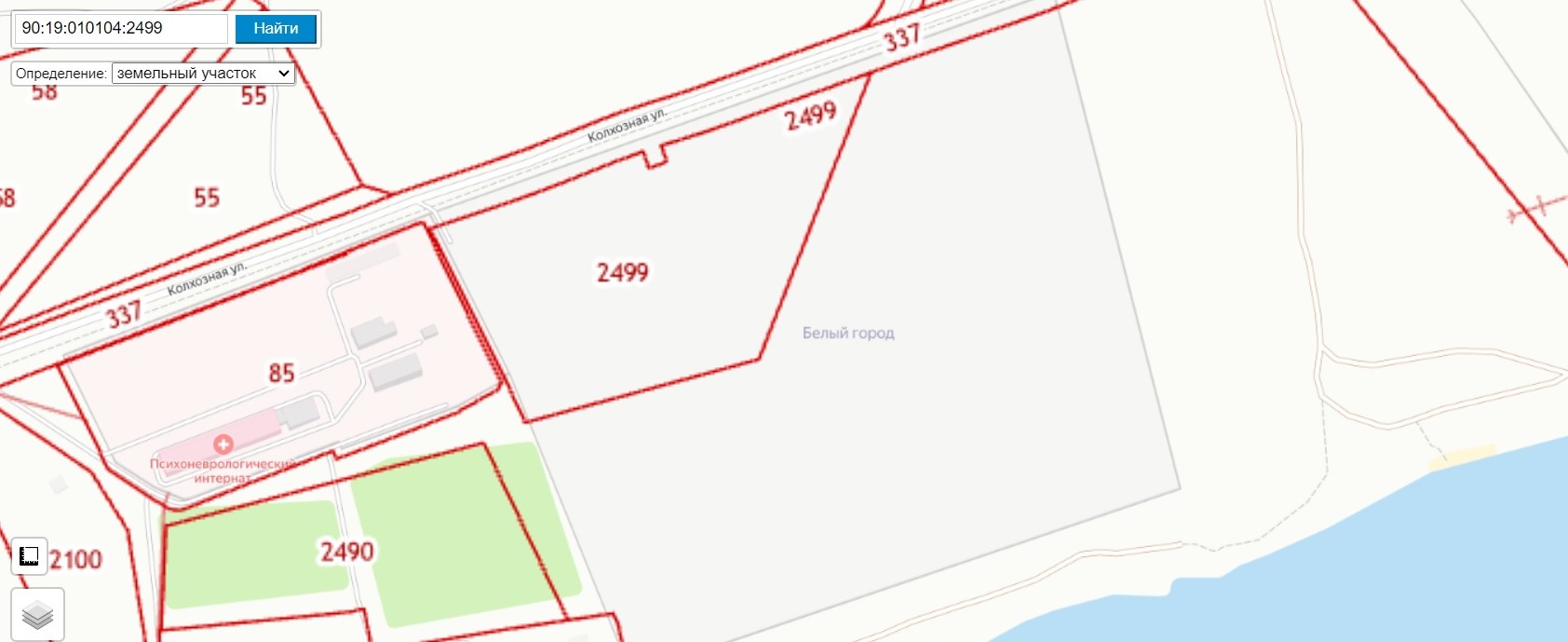
In November 2023, Bely Gorod Specialized Developer LLC (Chelyabinsk city) began preparations for the construction of a complex of low-rise apartment buildings of the project “Bely Gorod Residential Complex. Stage No. 1” in the city of Kerch, Kolhospna Street (in Russian – Kolkhoznaya) on the land plot (according to the Russian cadastre) No. 90:19:010104:2499. The Act of the so-called State Historical and Cultural Examination... regarding measures to preserve objects of cultural heritage in the “Area of the cinder heap of the Totleben Fort, 19th century” was drawn up by Shukri Khalilov.
Rescue archaeological field work (excavations) must be carried out for the archaeological heritage site within the scope of earthworks (excavations) with full or partial extraction of archaeological items from excavation trenches within the territory of the newly discovered archaeological heritage site. Otherwise, the existence of the cultural layer in the said area will be under threat.
Gallery
Additional files
Involved persons
- - Ministry of Culture of the Russian Federation
- - Bely Gorod Specialized Developer LLC
- - Crimean Complex Architectural and Restoration Workshop LLC
- Director of Crimean Complex Architectural and Restoration Workshop LLC - Shukri Khalilov
- Crimean Regional Center for Archaeological Research LLC - O. V. Sharapa
Video gallery
information is clarified
Sources
- Act of the state historical and cultural examination of the section of the project documentation “Measures to ensure the safety of cultural heritage objects” of the project documentation “Bely Gorod Residential Complex” in the city of Kerch, Kolkhoznaya Street, on land plot No. 90:19:010104:2499. Stage No. 1
- Iievleva V.P., Kotushko O.A., Zakruzhetska A.Yu., Bobrovskyi T.A, Hradun E.Yu. (2011); edited by V. P. Iievleva. Chernihiv: Desnianska Pravda Editorial and Publishing Complex OJSC, 180 p.; 85 images.
- Order of the so-called Ministry of Culture of the Republic of Crimea dated March 24, 2023 No. 80-OKN “On the newly discovered archaeological heritage site ‘Area of the cinder heap of the Totleben Fort, 19th century, located in Kerch city, Republic of Crimea.’”
Links
information is clarified