General information
Location
District - Vasylivka district
City - 1.0 km to the southwest of the southwestern outskirts of Dolynka village (former Chervonoarmiiske)
Kind of cultural heritage
ArchaeologicalObject type
СonstructionsViolation type
information is clarifiedResearch zone
Zaporizhzhia regionMap
Object history and violation description
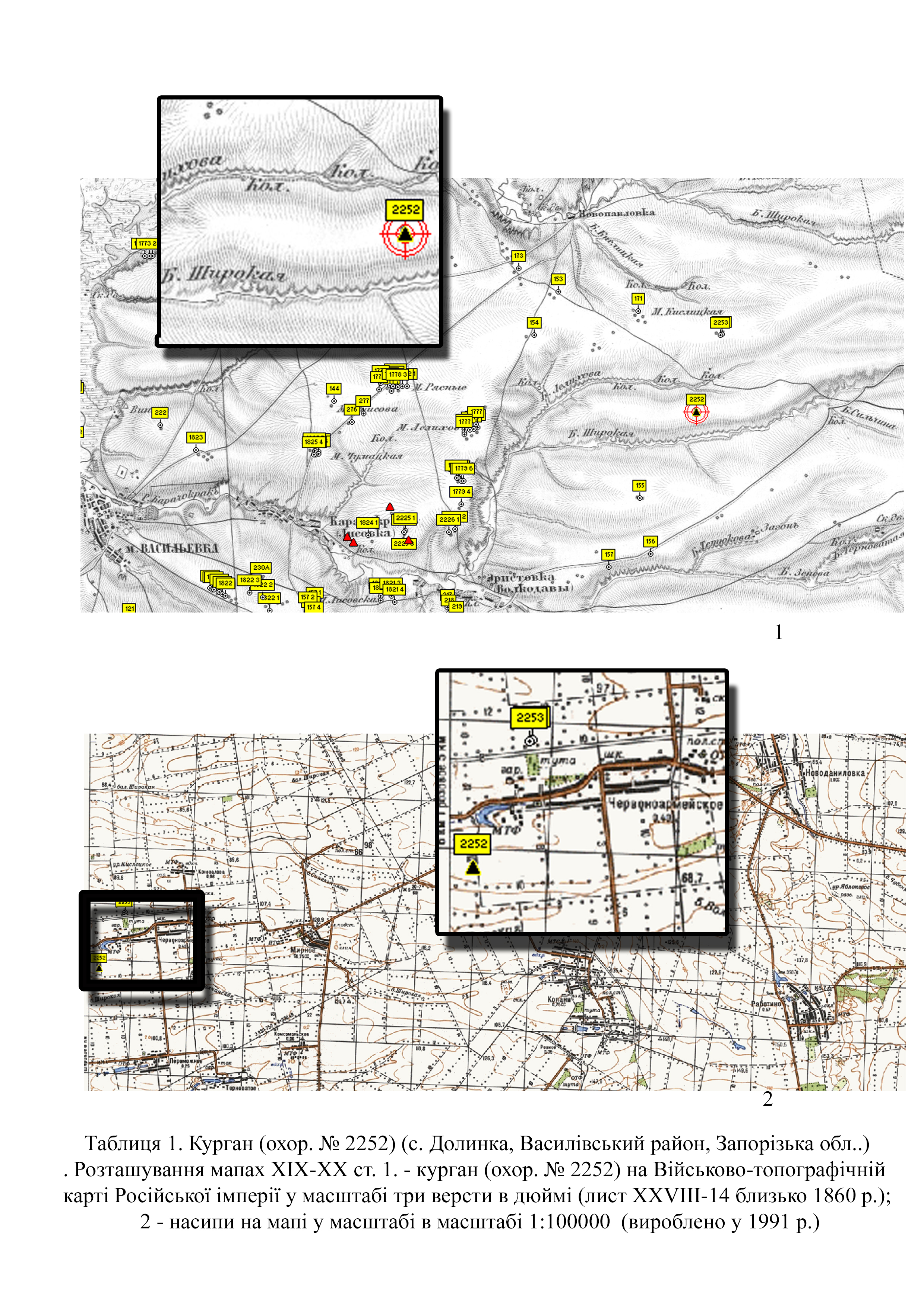
The territory of the steppe boasts a huge number of mound necropolises (Table 1). The terms “barrow” or “grave” mean a round or long mound of earth erected over one or more burials. The first barrows emerged in the steppe zone of the Northern Black Sea region in the 4th millennium BC and existed until the 1st half of the 2nd millennium AD. The long-term use of such embankments as necropolises gave rise to barrow groups. The barrows contain layers of several historical eras. Burials carried out at different depths are divided into main and inlet burials. Each time, the barrow was filled in, stone stelae and wooden pillars were installed on its top. The barrow was repeatedly used during trizna – rites related to honoring the souls of buried ancestors.
Archaeological research in the territory of Zaporizhzhia region was carried out in the 1970s and 1980s during the heyday of excavations associated with the growing construction of land amelioration structures (Toshchev, Yelnikov, Drovosekova, Drevnosti Zaporozhskogo kraya, 2003. 49-55). The same period marked the beginning of the inventory of cultural heritage sites.
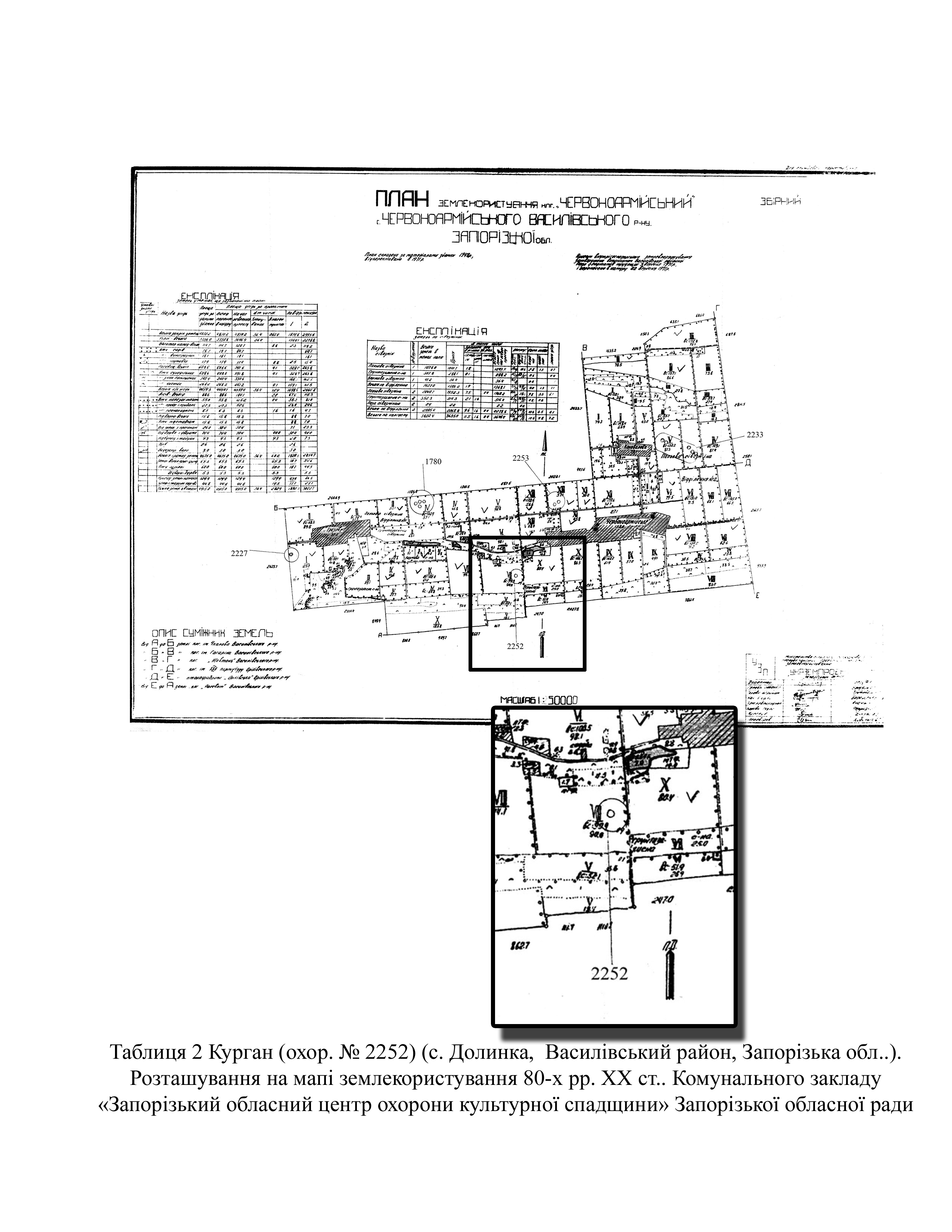
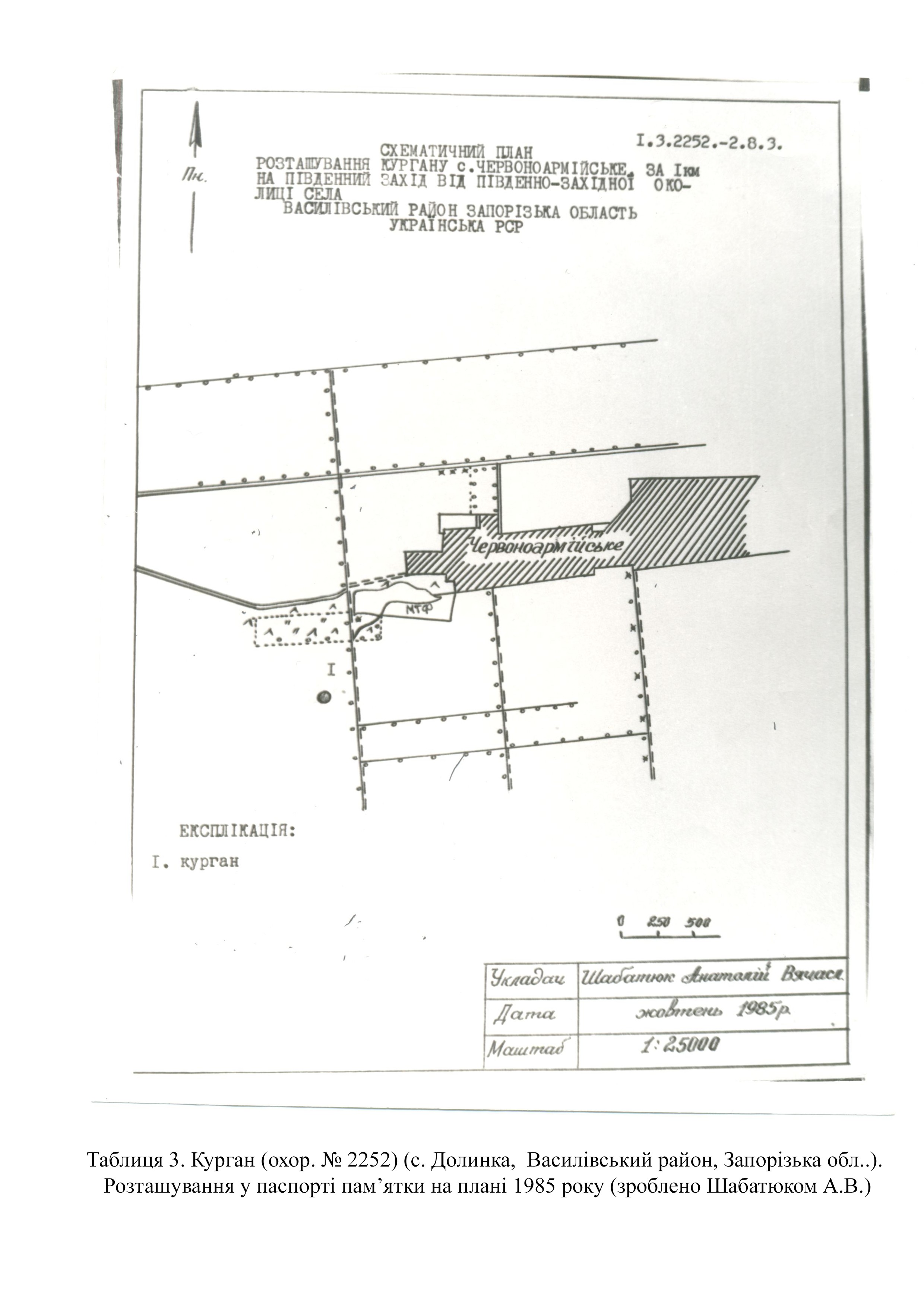
The barrow (protection No. 2252) was first examined by A. Redkov, a researcher of the Zaporizhzhia Regional Museum of Local Lore, in 1984 (Tables 2, 3)
In 1985, the executive committee of the Zaporizhzhia Regional Council of People's Deputies made a decision to include barrow group No. 2252 in the list of archaeological sites of local importance and approved its protection zones (No. 434 of November 26, 1985).
The barrow meets the criteria of authenticity and is also associated with historical events, beliefs and the development of culture in this area.
According to the certificate, the mound is semi-oval and round in plan (Table 2; 3). Mound parameters are as follows:
height – 0.6 meters; diameter – 27 meters.
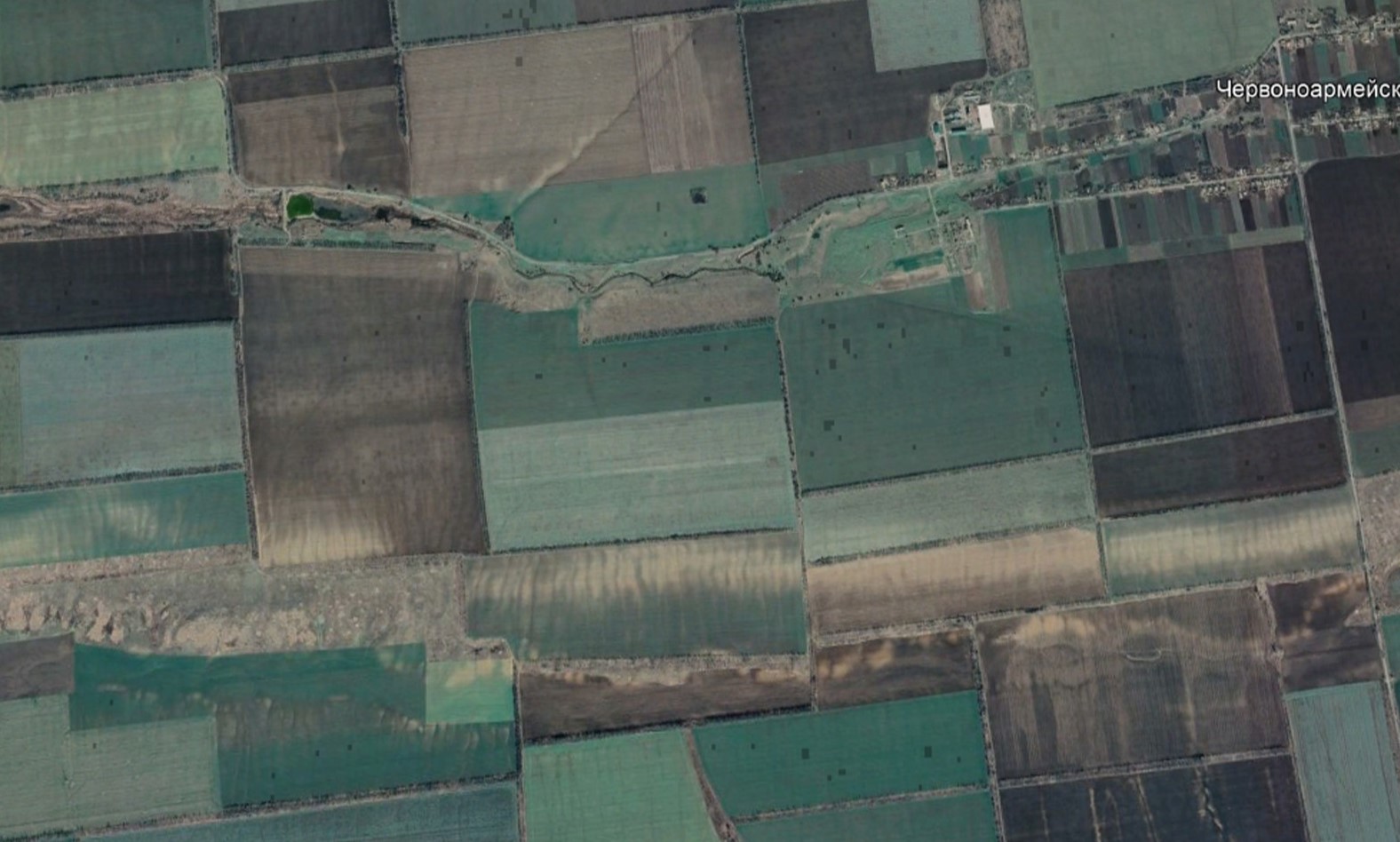
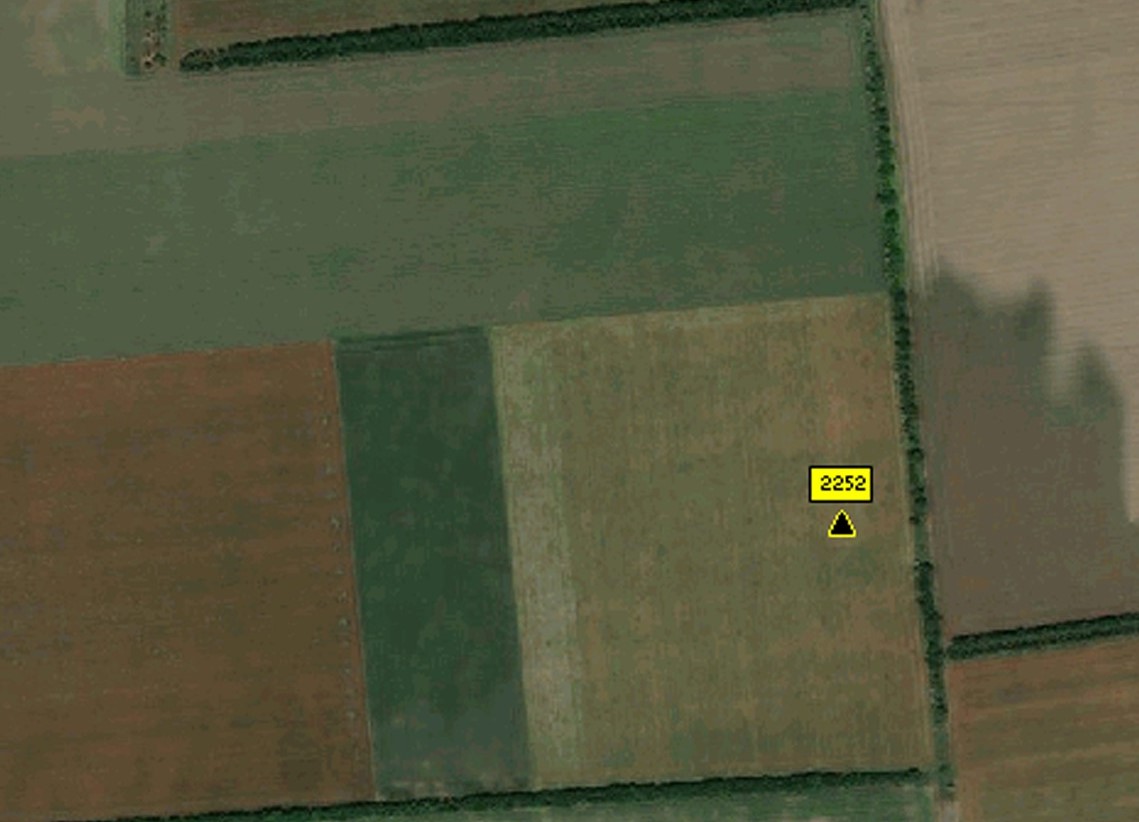
In the space images from March 8, 2020 from the Google Earth Pro server (https://google-earth-pro), it is clearly visible that the mound had no significant damage (Table 4).
According to the map of the war chronology, during the southern offensive, on March 13, 2022, Vasylivka district was occupied by units of the National Guard of Russia (Chronology of the war by the Current Time agency https://www.currenttime.tv; Deep State map https://deepstatemap.live).
During 2022–2023, units of the 429th Motorized Rifle Regiment, 125th Motorized Rifle Regiment of the so-called DPR and the 4th Military Base of South Ossetia were stationed here.
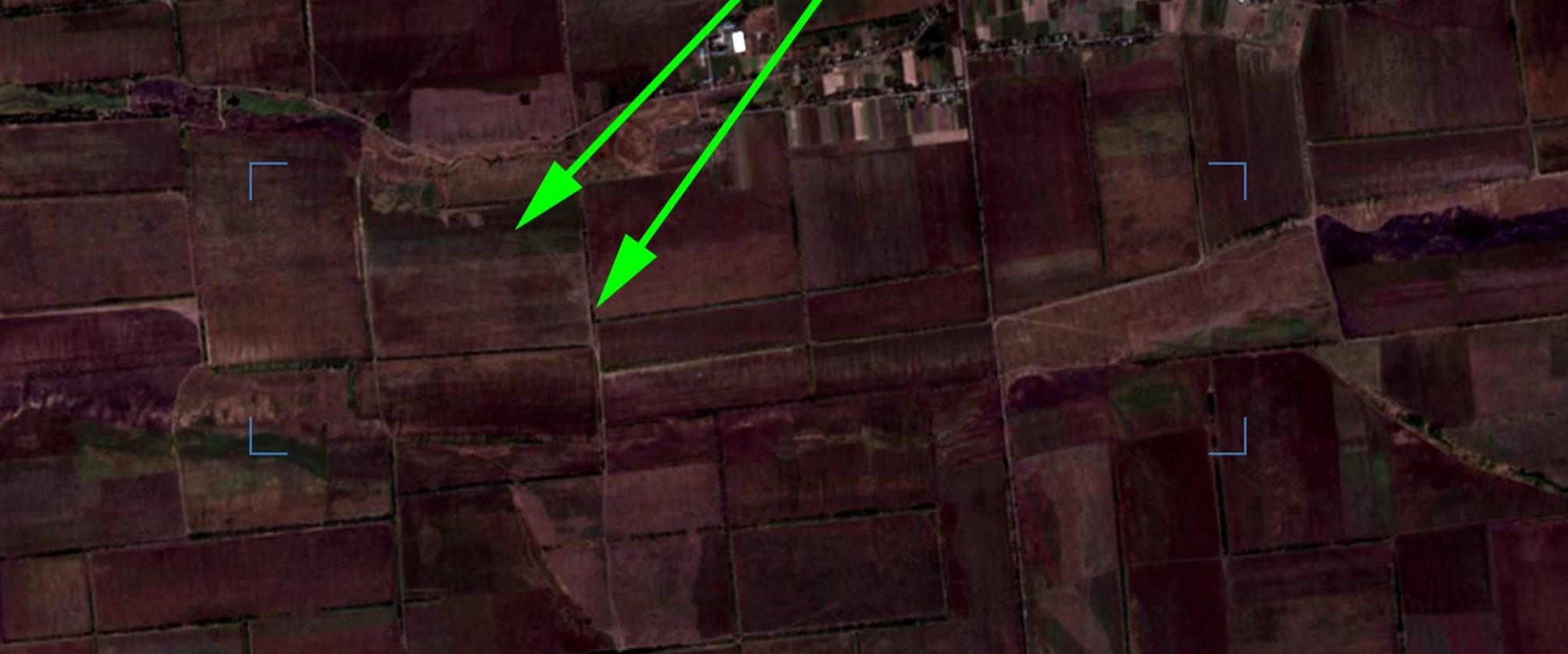
Thanks to high-quality images (as of September 8, 2023, a space image of the Sentinel-2 L2A satellite from the server https://eos.com), it can be established that the mound of the barrow (protection No. 2253) was destroyed by the arrangement of trenches (Table 5).
Gallery

Additional files
Involved persons
- - The occupation administration of the city of Vasylivka (Zaporizhzhia region)
- - The military occupiers authorized the construction of fortifications
Video gallery
information is clarified